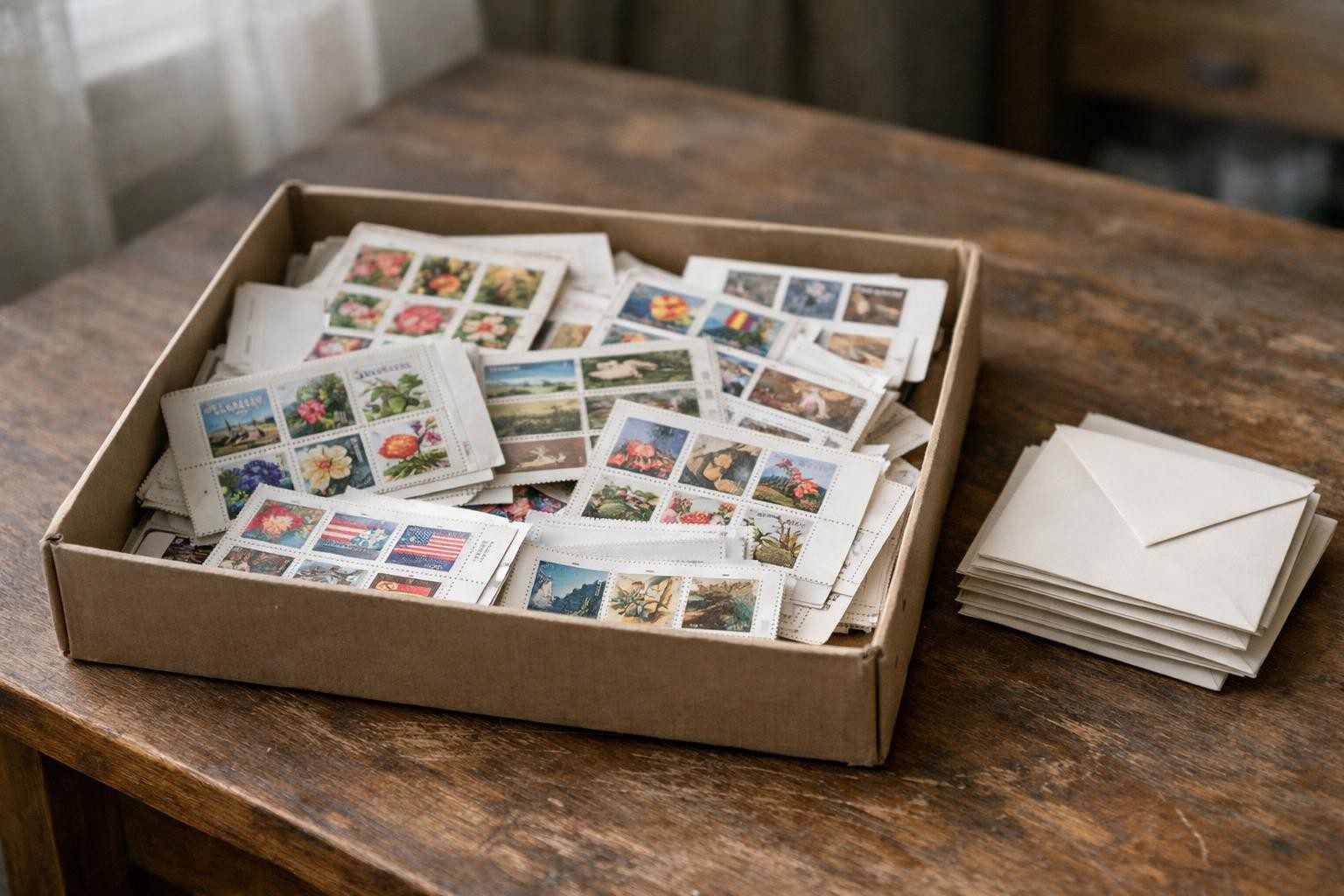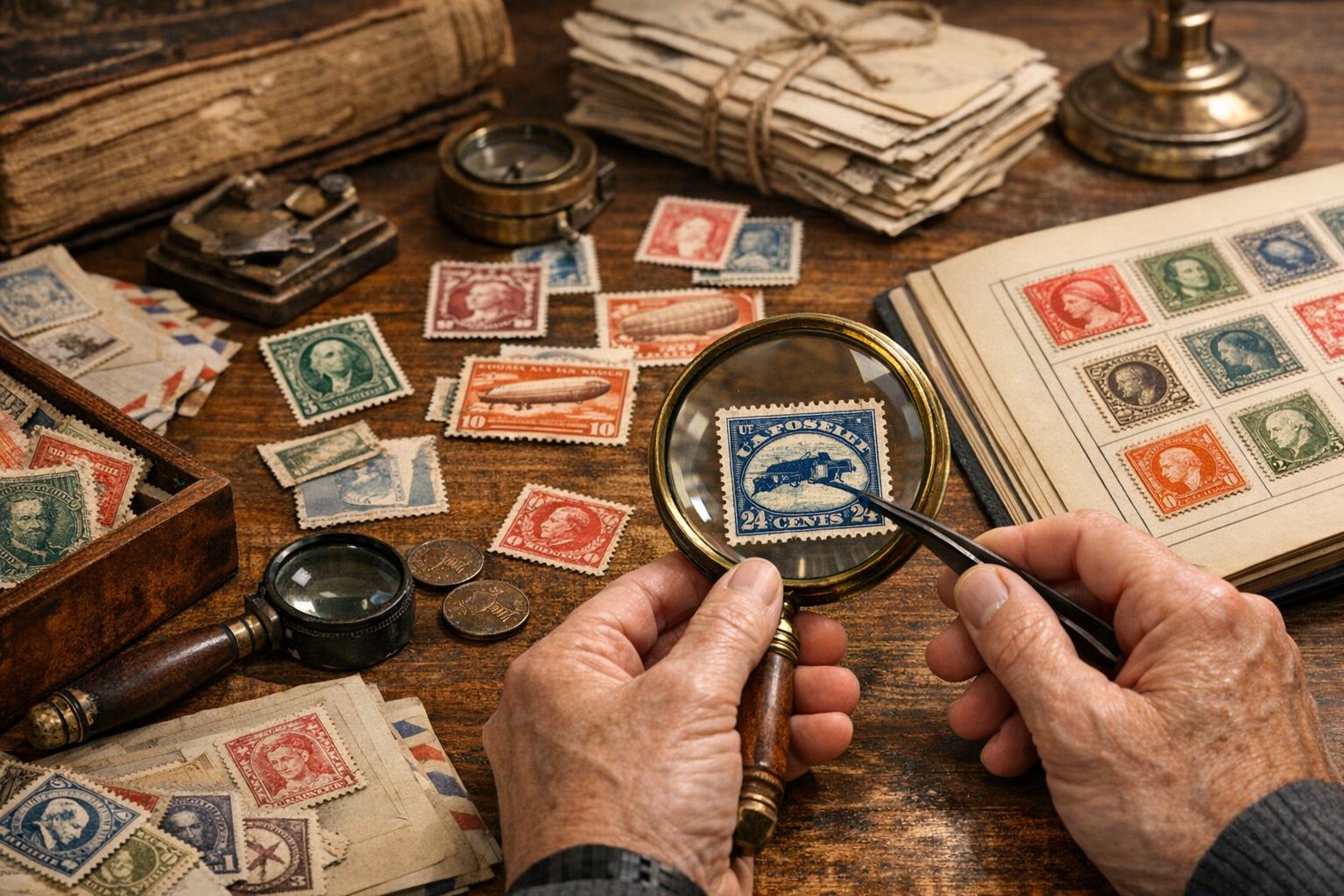
Are old stamps worth anything? Honestly: most are not, and a few are worth more than most people would believe. The difference comes down to a handful of signals you can learn to read. This guide explains why the majority of old stamps carry little value, the specific signs that separate the exceptions, and how to figure out what you actually have before you sell, insure, or toss anything.
Why Most Old Stamps Are Common
The hard truth of stamp values is supply. From the 1930s onward, the Post Office printed stamps in enormous quantities, and collecting was popular enough that people saved them by the sheet. Mint U.S. postage from after 1930 survives in such volume that most of it trades at or below face value today, no matter how old it looks. Age alone does not create value; scarcity does. A stamp from 1935 saved by two million collectors is common. A stamp from 1918 with a printing error that slipped out in one pane of 100 is a legend.
Condition problems compound the supply problem. Creases, tears, thin spots where paper was pulled away, missing perforations, heavy cancellations, and disturbed gum all push a common stamp’s value toward zero and take a serious bite out of scarce material too. So do amateur mistakes made after the fact: taping stamps into albums, trimming perforations, or regumming a stamp to fake mint condition, which experienced buyers detect quickly.
The Signals That a Stamp Might Be Valuable
Rarity is the first gate. Age matters mainly before roughly 1930 for U.S. material, and the question is how many survive, not how many were printed. Errors and varieties (inverted centers, missing colors, wrong watermarks, imperforate panes) are where spectacular values live.
Condition multiplies everything. For the same stamp, superb centering with fresh color and undisturbed original gum can bring many times the price of an average copy. Grading runs from Poor through Superb, and serious price jumps happen at the top grades.
Demand decides whether rarity gets paid. Classic U.S., early airmails, and famous errors always have buyers. Obscure material can be genuinely scarce and still cheap because few collectors chase it.
Provenance and certification close the deal. A certificate from a recognized expertizing service (APS, PSE, or the Philatelic Foundation) turns “probably genuine” into “certified,” and that difference shows up directly in the sale price on anything significant.
Quick Checks You Can Do at Home
Start by identifying what you have. Note the country, denomination, and design, then look the stamp up by its catalog number; our guide to Scott numbers shows how the numbering works. Check the details that split common issues from scarce varieties: perforation count, paper type, and watermarks. Then assess condition honestly under magnification: centering, cancels, gum, and any faults.
Be careful with lookalikes. Many common stamps closely resemble famous rarities, and the differences come down to details like perforation measurements, watermarks, or paper. The 1883 two-cent Washington and the far scarcer re-engraved varieties, or the many Washington-Franklin types, trip up new collectors constantly. When a catalog shows a big price for something that looks like your stamp, verify the variety before you celebrate.
What Old Stamps Actually Sell For
Catalog value is not market value. Dealers and auction results routinely run at a fraction of catalog for ordinary material, and our breakdown of catalog value versus real selling price explains why. As practical shorthand: unused post-1930 U.S. postage typically sells for 30 to 70 percent of face value in bulk; common used stamps sell by the shoebox, not the piece; and genuinely scarce, certified material sells at strong prices because buyers compete for it.
Inherited a collection? The same rules apply, with one addition: do not break up, clean, or reorganize anything before an appraisal. Original albums, covers, and even the way a serious collector organized their material can carry information (and value) that disappears once it is shuffled.
When to Get a Professional Opinion
If your material is mostly post-1930 sheets and albums, a quick look from a dealer will confirm face-value territory and save you weeks of catalog work. If you have pre-1930 material, suspected errors, or anything with a story attached, a professional appraisal is worth it before you sell. We have appraised more than 5,000 collections, and the review costs you nothing but the time to send photos.
Get a stamp collection appraisal and find out what you actually have.
Sorting The Worthwhile From The Worthless In One Pass
Most holdings presented for valuation fall into a small number of recognizable categories, and the category can usually be established by inspection before any individual stamp is identified.
Material issued before approximately 1900 is the category most likely to carry value. Stamps of that period were used for ordinary correspondence and were discarded with the envelopes that carried them, so the surviving population is small relative to the quantity originally printed. Scarcity in the surviving population is what produces value, and scarcity in the surviving population is a function of what was thrown away rather than of what was made.
Mint commemorative material issued between approximately 1935 and 1990 is the category least likely to carry value above face value. Material of that period was saved deliberately and in very large quantities by collectors who expected the material to appreciate, and the surviving supply substantially exceeds current collector demand. A stamp saved by a million collectors at the moment of issue cannot become scarce however old that stamp eventually becomes.
Commercially produced first day covers issued after approximately 1950 form a third category and behave in the same way as mint commemorative material of the same period, for the same reason. Very large quantities survive and current collector demand does not absorb the surviving quantity.
Unused postage that remains valid for mailing forms a fourth category and is valued by total face value rather than by philatelic interest. Unused postage is purchased at a discount to face value by dealers who resell that postage to mailers rather than to collectors, and applying the stamps to ordinary mail returns full face value rather than a discount to it.
Complete envelopes bearing stamps and postal markings form a fifth category and are frequently undervalued by owners. An envelope whose postal markings record an unusual route, an unusual rate or an unusual date can be worth several times the value of the stamp it carries, and separating the stamp from the envelope destroys that value permanently.
Estimation becomes unreliable precisely where value is highest, because the presence of a single scarce item moves a holding between categories and because scarce items are the items least likely to be recognized by an owner performing an estimate. The figures behind each category are set out in our guide to how much a stamp collection is worth, and a written stamp appraisal is the route to a specific number rather than a category.