The Penny Black turns up in inherited collections more often than people expect, often in glassine envelopes marked ‘RARE’ by the previous owner. The first adhesive postage stamp issued by any country, the Penny Black is the most famous stamp in the world, but it is almost never the valuable item in the box.
Famous and rare are two completely different things. The Penny Black is probably the best example in philately of the difference between famous and rare and how this affects the value of stamps.
What The Penny Black Is And How Many Were Printed
The Penny Black was issued on 1 May 1840 and was valid for postage from 6 May 1840, as part of the postal reform associated with Rowland Hill. The stamp carries a portrait of Queen Victoria derived from a medal engraving by William Wyon. Printing was carried out by Perkins, Bacon and Petch, and printing continued until the Penny Black was withdrawn in favor of the Penny Red early in 1841.
There were approximately 68,808,000 Penny Blacks printed during the approximate nine month period. A print run of that size for a single design is large by the standards of any era, and a print run of 68,808,000 for a stamp issued in 1840 is extremely large. This figure is of particular importance because rarity is determined by how many copies of a stamp exist today and that number is limited by the number of copies that were printed.
Survival Rates Kept The Penny Black Common
The majority of stamps issued in the 19th Century were thrown away with the envelopes that carried them; therefore, most ordinary 19th century material is scarce today. However, the Penny Black is an exception. It was immediately identified as something new and unique when it was first issued, and it was deliberately saved by those who received it, in numbers unmatched by any other stamp of its era.
Saving stamps on issue is the best way to ensure that they do not become scarce. It is not possible to give a precise figure for the number of surviving Penny Blacks as published estimates vary considerably between sources. However, used Penny Blacks are readily available for purchase at any major stamp auction in any given month.
Plate Number Separates An Ordinary Example From A Valuable One
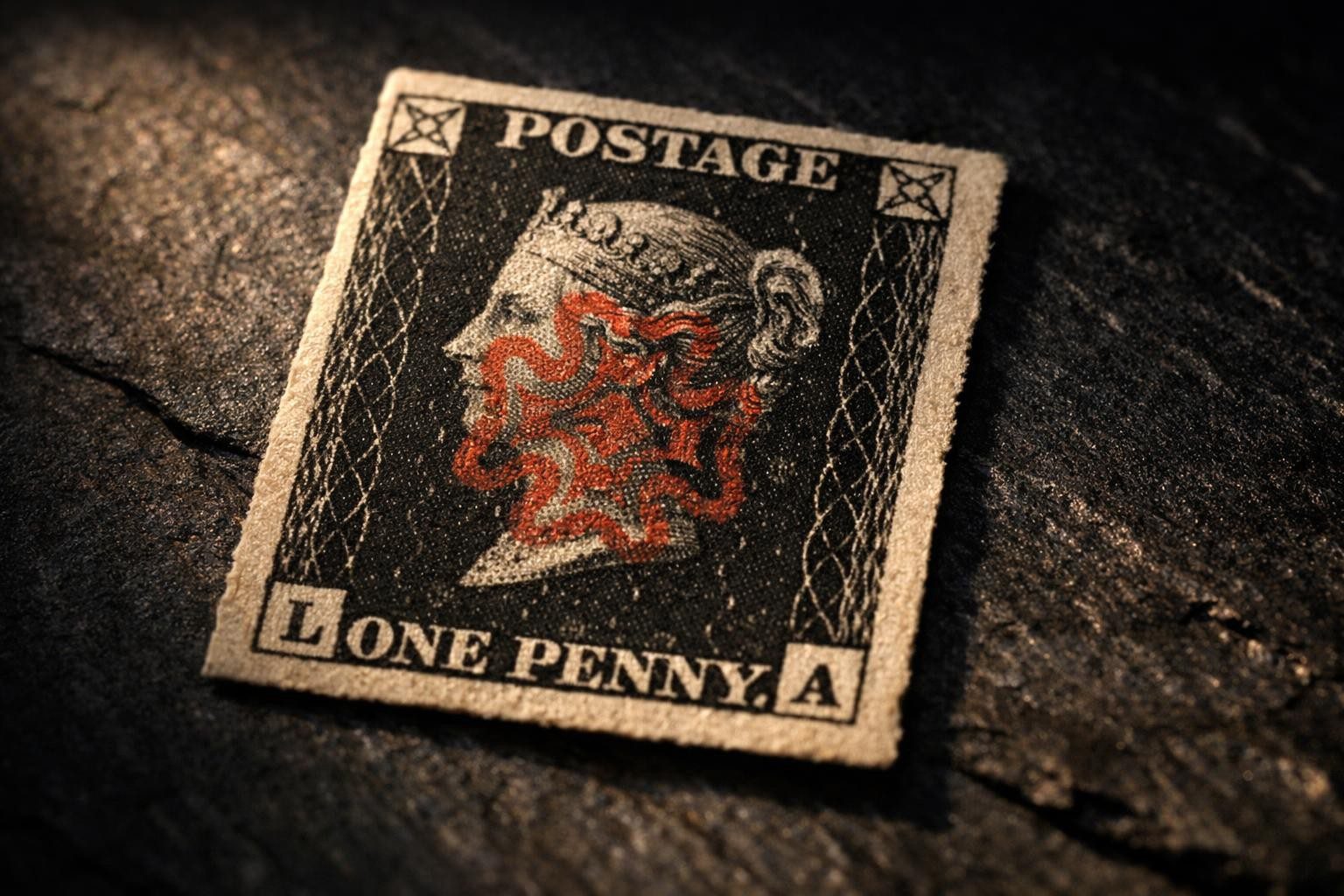
There were eleven plates of the Penny Black (Plate 1a to Plate 11). Each stamp has two letters in the bottom corners, which identify the position of the stamp on the sheet. By combining the letters in the corners with the characteristics of the printing, a specialist can attribute a particular Penny Black to a particular plate.
Plate attribution produces very wide differences in value. Plates that remained in use for long periods produced large quantities of stamps and the stamps from those plates are correspondingly common. Plate 11 was used only briefly before the changeover to the Penny Red, and material from Plate 11 is scarce as a direct consequence of that brief period of use. An owner who does not know which plate a Penny Black came from does not yet know what that Penny Black is worth.
Margins Matter More Here Than On Almost Any Other Stamp
The Penny Black was issued imperforate, which means the sheets carried no perforations and individual stamps were separated with scissors by whoever used them. Separation by scissors was performed by clerks and members of the public rather than by machine, and separation by scissors produced enormously variable results.
Every Penny Black was cut from the sheet by hand. Thus, the margins of white space on the individual stamps vary greatly in width. This is the single most important condition factor for the Penny Black. A stamp with four full and clear margins on all four sides will fetch a substantial premium over a similar stamp with margins cut into the printed area on one or more sides. Such a stamp with margins cut into on two sides is considered damaged, even if the rest of the stamp is in pristine condition.
Cancellation Appearance And Why The Penny Black Was Replaced
The earliest Penny Blacks were cancelled with a Maltese Cross in red ink. This cancellation was difficult for the post office clerks to read on the black stamp and it could also be cleaned off, which allowed a stamp to be presented for use again.
The Penny Red was introduced in 1841 to solve both problems, i.e. to make a black cancellation on a red stamp more clearly visible and to make its removal more difficult. For a collector, the color and clarity of the cancellation affect value. A light, well struck cancellation which leaves the portrait clearly visible is preferred to a heavy cancellation which obscures the portrait.
Reprints, Forgeries And Pressed Reproductions
Reproduction copies of the Penny Black have been made since the 19th Century, for sale as souvenirs, to fill out spaces in stamp albums and as deliberate forgeries. Many such reproductions are clearly marked on the back as “reproduction” but many are completely unmarked. This type of material is common in estates, and also among collections which have been put together by individuals who were not stamp collectors.
A genuine Penny Black of any significant value should be examined by a specialist before a figure is relied upon. The Penny Black is one of the world’s most recognizable stamps and there are large numbers of reproductions on the market today. As a result, the Penny Black is among the stamps most often misidentified by owners who are working from a photograph of the stamp rather than examining the stamp itself.
What Yours Is Probably Worth
Most Penny Blacks that come through our door are used, cut close on at least one side, and from a common plate. Those are worth real money, just not life changing money, and the number depends almost entirely on margins and plate rather than on age.
If you have one, send a photo of the front and the back. A stamp appraisal is $4.99 for a single stamp, and you get a written report with the plate attribution where it can be established, a wholesale figure and a retail figure. Our guide to what actually makes a stamp rare covers why the famous ones so rarely top the list. If the Penny Black came with a wider holding, selling the whole stamp collection is usually the better route than breaking it up.