The album a collection sits in tells us a surprising amount before we look at a single stamp. It indicates roughly when the collection was assembled, how seriously it was assembled, and quite often whether the contents have been damaged by the album itself.
Albums also cost money, and the wrong one costs more than the stamps it holds are worth. Here is what the different kinds are for.
Printed Albums With Illustrated Spaces
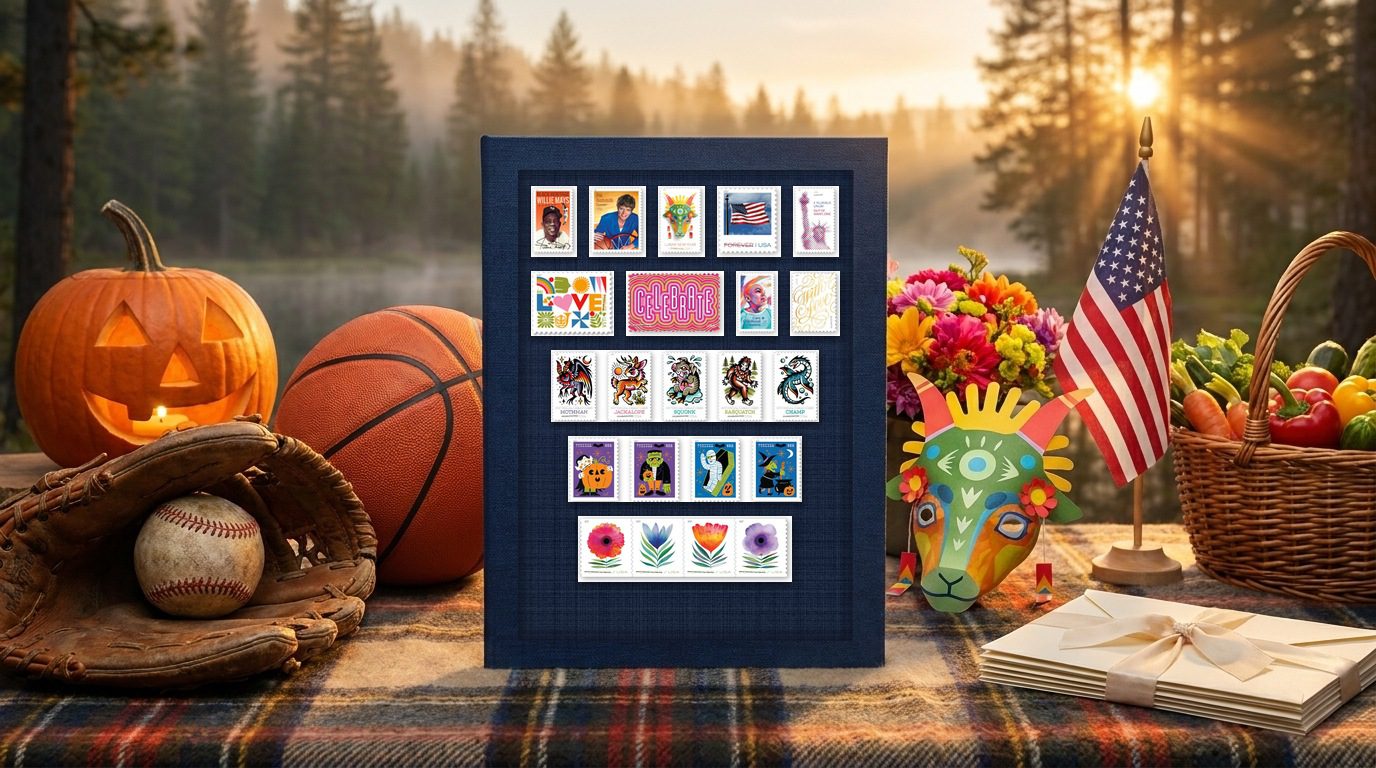
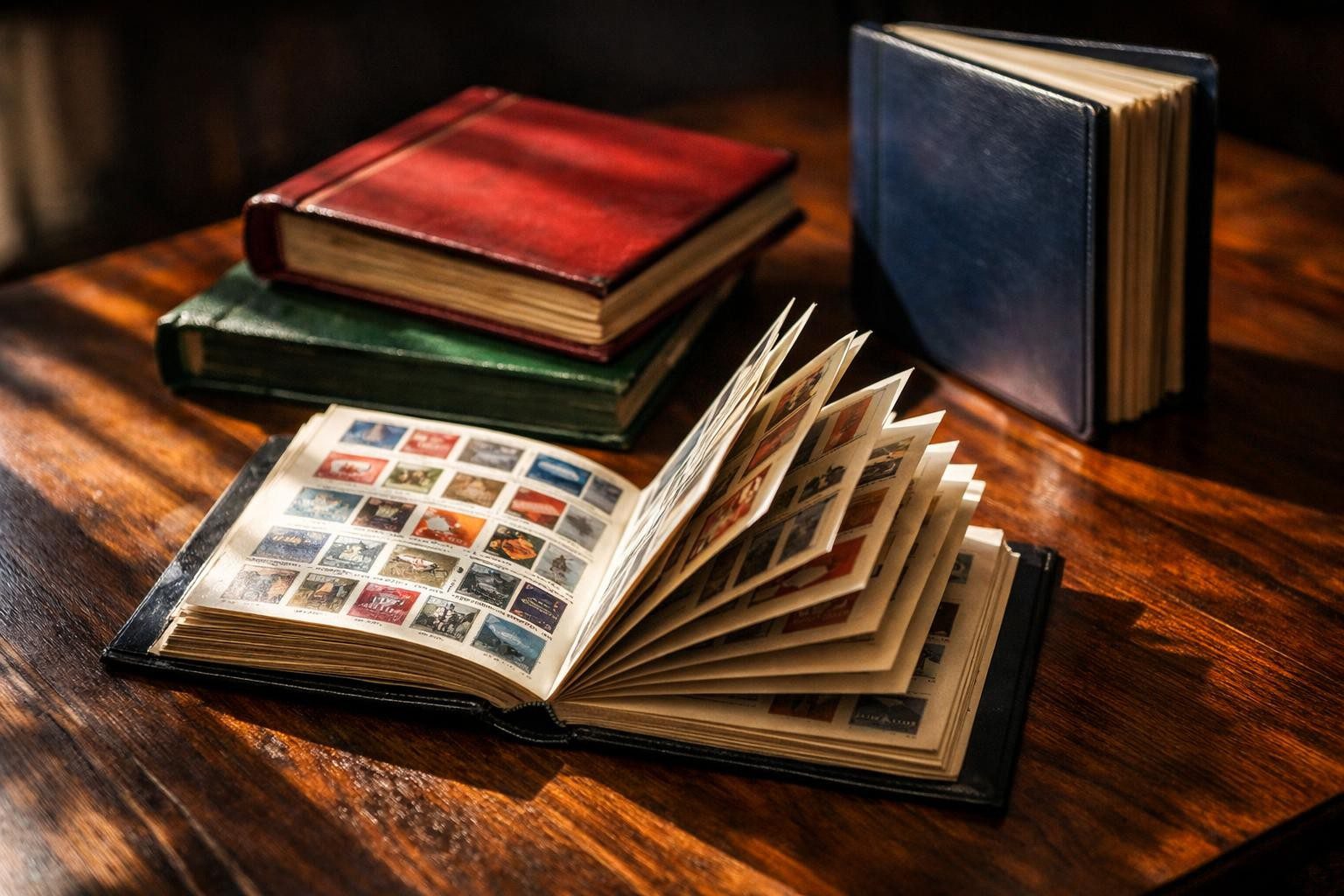
A printed album provides a pre marked space for each stamp of a defined collecting area, with an illustration and a catalog number identifying what belongs in each space. Printed albums are organized by country and by year of issue, and printed albums are produced in editions ranging from a single worldwide volume for beginners up to specialized multi volume sets covering one country in detail.
The structure of a printed album is both the principal advantage and the principal limitation of the format. A printed album shows a collector exactly what has been acquired and exactly what is missing, which is why the format suits collectors working toward completion of a defined area. A printed album also provides no space at all for material the publisher did not anticipate, which is why the format suits specialized collecting poorly.
Older printed albums were frequently produced on paper that was not acid free, because the standards now applied to archival paper products were not in general use when those albums were manufactured. Acidic album paper in prolonged contact with stamp paper contributes to toning, and toning on the reverse of stamps that matches the pattern of an album page is a common finding on collections assembled before the 1980s.
Stockbooks With Glassine Or Acetate Strips
A stockbook consists of pages carrying horizontal strips into which stamps are slid without any adhesive, which allows stamps to be inserted and removed repeatedly without being mounted. Stockbooks impose no organizing scheme of their own, so a stockbook holds material in whatever order the collector chooses.
The absence of adhesive makes stockbooks the safer format for material of genuine value, and the absence of adhesive is why dealers use stockbooks almost exclusively for stock. A stockbook also accommodates duplicates, part sets and unidentified material without the awkwardness that those categories create in a printed album.
Strip material varies in quality between products and the quality of the strip material matters over long periods. Strips manufactured from degraded plastics can transfer residue to the stamps held in them, following the same mechanism that affects older plastic sleeves and mounts generally.
Hingeless Albums With Pre Mounted Clear Pockets
A hingeless album combines the organizing structure of a printed album with clear mounts already affixed to each space, so that a stamp is placed into a mount rather than attached to the page. The format removes the need for hinges entirely, and the format therefore removes the gum disturbance that hinging causes on unused material.
Hingeless albums cost substantially more per page than either printed albums or stockbooks, which is the trade being made. For a collection consisting largely of used material the additional cost returns very little, because hinging does not damage used stamps in the way that hinging damages unused stamps with original gum. For a collection of unused material in original gum condition the additional cost is usually justified by the gum preservation alone.
Hinges And Why Hinging Reduces Value On Unused Stamps
A stamp hinge is a small piece of gummed paper, usually described as peelable, used to attach a stamp to an album page. Hinges were the standard mounting method for most of the history of the hobby and the great majority of older collections are hinged throughout.
Hinging disturbs the original gum on an unused stamp, and the market distinguishes sharply between unused stamps with undisturbed original gum and unused stamps where the gum has been disturbed by a hinge. The distinction is recorded in catalog listings and in auction descriptions, and the price difference between the two states on a scarce stamp is frequently large. Hinging has no comparable effect on used stamps, which carry no original gum to disturb.
Older hinges that were not of the peelable type can bond permanently to the stamp above and the page below. Removal of a bonded hinge by force produces a thin spot in the stamp paper, and a thin spot is a permanent condition defect. A hinge that does not release easily should be left alone and shown to someone before any attempt is made to remove it.
What Album Choice Does Not Do
An album does not add value to the stamps mounted in it. A collection housed in an expensive specialized album is worth what the stamps are worth, and the album itself is a separate item with its own modest resale value that rarely approaches what the album cost new.
Album choice protects value rather than creating value, and album choice protects value principally by preventing the gum disturbance, toning and adhesive damage described above. An inexpensive stockbook kept in a stable interior room protects a collection better than a costly album kept in a garage.
Before You Buy Another Album
Find out what you have first. People regularly spend three hundred dollars on albums for a collection that is worth four hundred, and that is a decision that is hard to undo.
A stamp appraisal is $49.99 for a whole collection from up to 20 photos, and the report says plainly which material justifies proper housing and which material does not. Our guide to what actually makes a stamp rare explains why so few stamps in a typical album are the ones worth protecting. If the answer turns out to be that the collection is better off sold than rehoused, selling a stamp collection explains how that works.