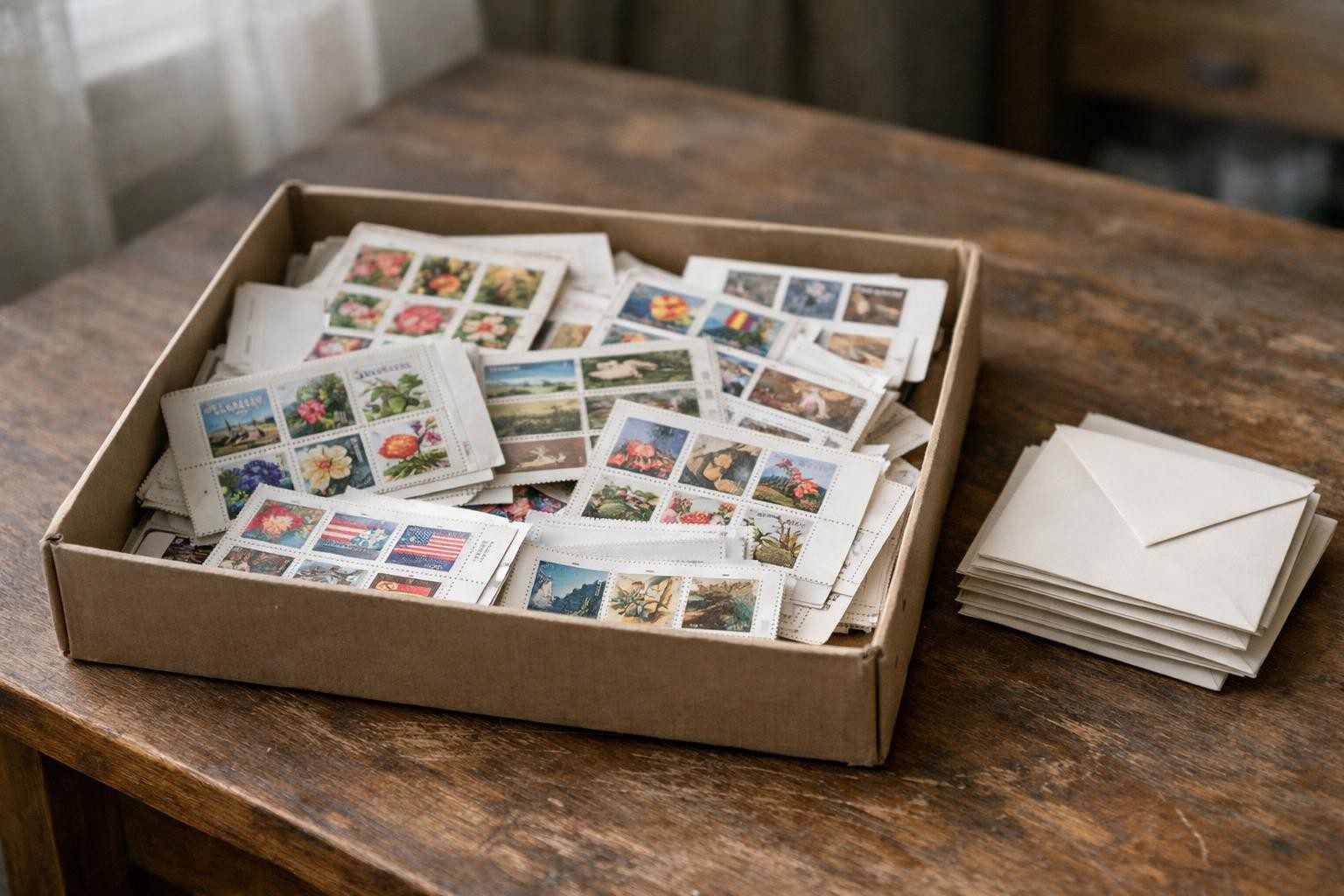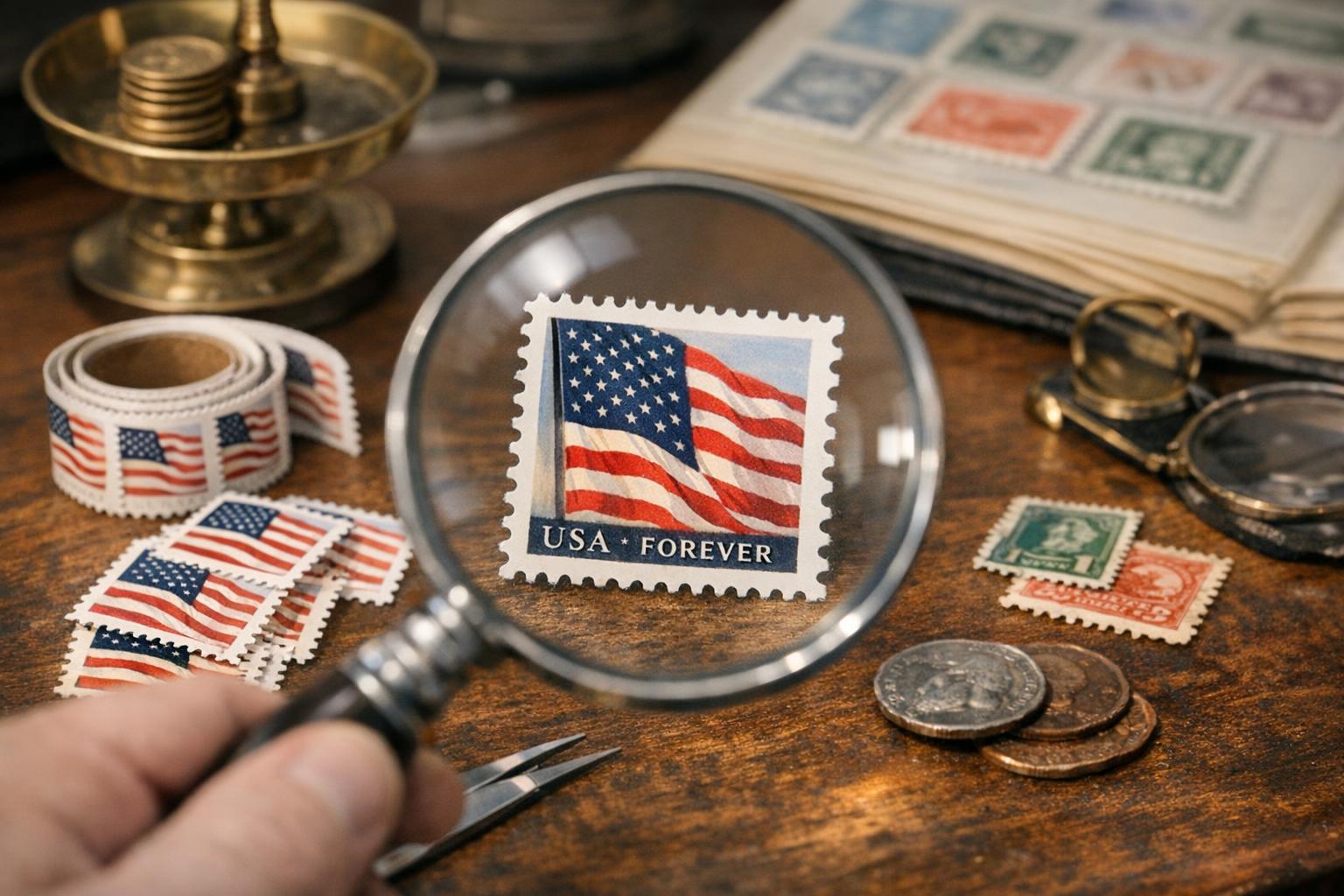
Forever stamps are the most commonly inherited, hoarded, and asked-about stamps in America, so let us answer the question directly: forever stamps rise in postage value but almost never gain collector value. This guide explains what forever stamps are, how commemorative forever issues fit in, what your accumulation is actually worth, and the narrow cases where holding makes sense.
What a Forever Stamp Is
Introduced by USPS in 2007, a forever stamp is always valid for the current First-Class one-ounce letter rate no matter what you paid for it. A forever stamp bought at 41 cents in 2007 mails a letter today just like one bought this year. That built-in escalation is the entire sense in which forever stamps “increase in value”: their postage utility tracks the rate upward.
Definitives, Commemoratives, and the Forever Label
Most forever stamps fall into two families. Definitive forever stamps are the everyday workhorses (flags, the Liberty Bell) printed continuously in enormous quantities. Commemorative forever stamps honor subjects, people, and anniversaries, are printed once in large but limited runs, and sell for a season before making way for the next program; nearly all modern commemoratives carry the forever designation. The commemorative label sounds collectible, and the designs are often excellent, but a print run in the tens or hundreds of millions is not scarce. For how definitives differ and which ones collectors chase, see our U.S. definitive stamps guide.
Why Forever Stamps Rarely Gain Collector Value
Collector value requires scarcity plus demand. Forever stamps have neither on their side: print runs are massive, virtually every issue is saved in quantity by collectors and the public, and the resale market is saturated with people trying to cash out accumulations. The practical ceiling for ordinary mint forever stamps is face value, and the going rate when selling in bulk to dealers or discount-postage buyers is 30 to 70 percent of face, depending on condition and format (full sheets and rolls at the top of that range, loose singles at the bottom). Our page on selling your stamps for cash covers how that market works.
Used forever stamps are essentially worthless in the market; they exist in unlimited supply.
The Exceptions Worth Knowing
A few forever-era items do carry premiums: genuine printing errors (the 2010s saw several, and error collectors pay real money for certified examples), press sheets and unusual formats issued in small quantities, and first-day covers of popular issues serviced in low numbers. These are exceptions you identify individually, not a reason to hold a shoebox of flag stamps. If you think you have a printing error, get it appraised before selling; errors are exactly where certification changes the price.
Hold, Use, or Sell?
Holding forever stamps as an investment underperforms almost anything else you could do with the money; postage rates rise slower than most investments compound, and the stamps only ever redeem at whatever discount the resale market applies. Use them if you mail things. Sell them in bulk if you hold more postage than you will use in a few years; the 30 to 70 percent range is the honest market, and anyone promising face value or more for ordinary forever stamps is not describing a real transaction.
If your forever stamps came inside a larger inherited collection, evaluate the whole collection properly before treating any of it as postage. Our guide to what old stamps are worth explains what separates spendable postage from material worth a real appraisal.