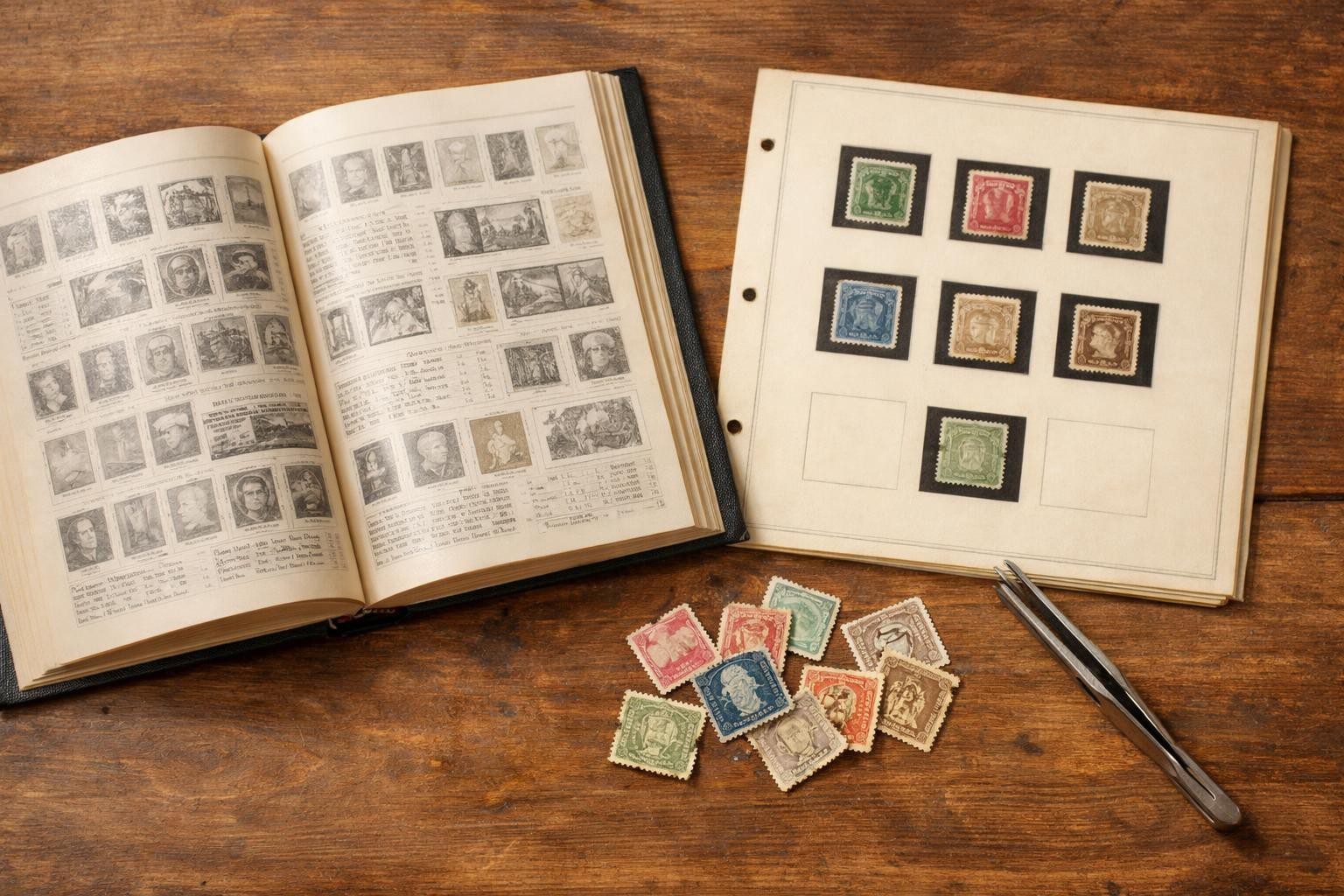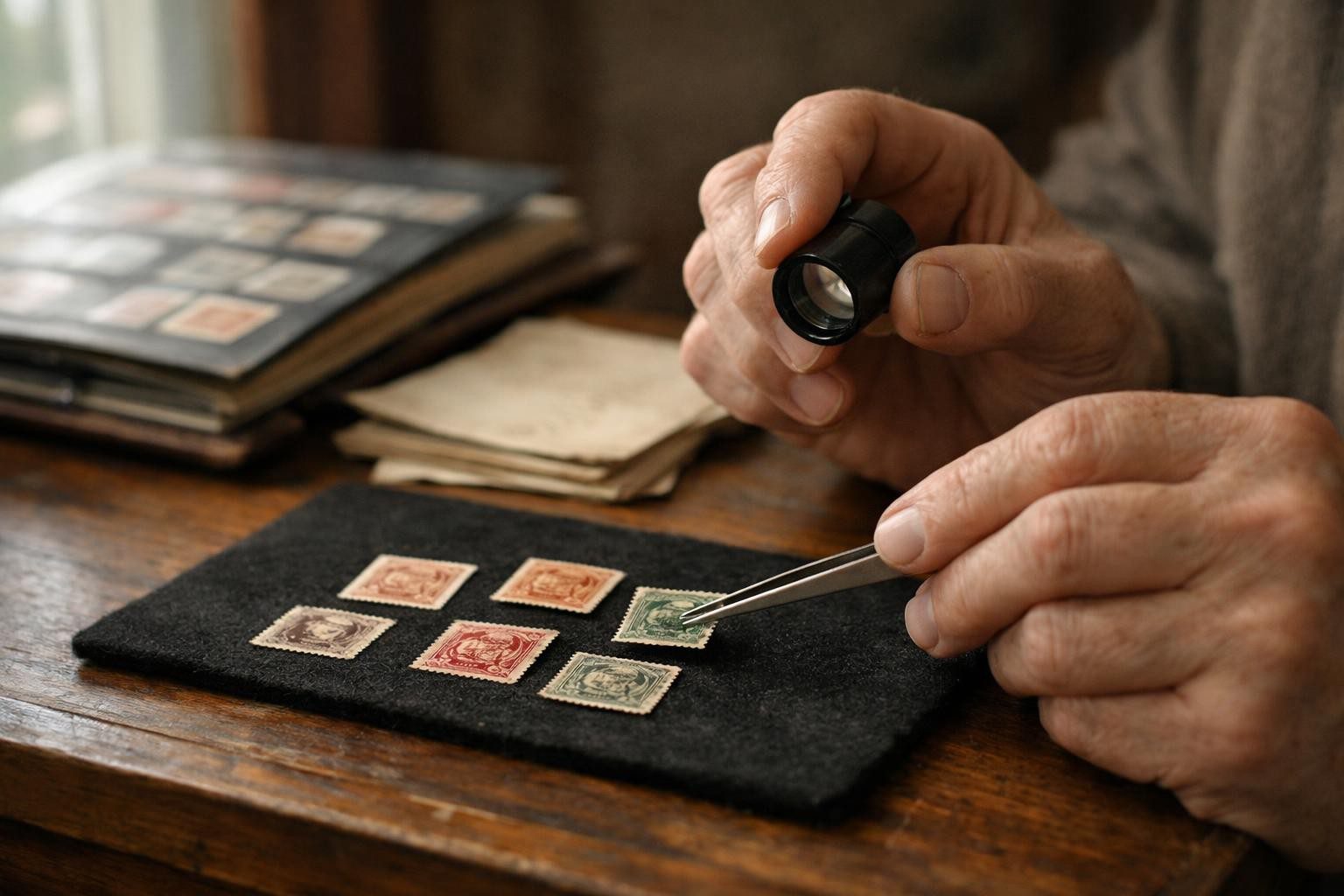
Most people asking who buys old stamps are holding a shoebox, an album that belonged to a grandparent, or a drawer of envelopes nobody has opened since the 1970s. The question behind the question is usually simpler than it sounds. People want to know whether anyone wants this material at all, and whether the person who wants it will be straight with them about what it is worth.
What follows is the honest map. Every kind of buyer who purchases old stamps in the United States, what each one pays, which material each one actually wants, and the mistakes that cost sellers money before a buyer has even seen the collection.
The Kinds Of Buyer Who Purchase Old Stamps
Stamp dealers
A stamp dealer is a business that purchases stamp collections outright and resells the stamps within those collections to collectors. Payment from a stamp dealer is made at the point of purchase, and no seller commission is charged by a stamp dealer. The offer made by a stamp dealer is calculated as the expected resale value of the collection minus the margin that the stamp dealer requires in order to operate. Margins required by stamp dealers vary widely, and the margin required by any particular stamp dealer is largely determined by the overhead that the stamp dealer carries. A stamp dealer operating a retail storefront with employees requires a considerably larger margin than a stamp dealer operating without a storefront and without employees.
The margin a stamp dealer requires is the single figure that most affects what a seller receives, and the margin a stamp dealer requires is rarely disclosed voluntarily. Sellers are advised to ask a stamp dealer directly what margin that stamp dealer is working toward before any collection changes hands.
Philatelic auction houses
A philatelic auction house does not purchase a stamp collection. A philatelic auction house accepts a stamp collection on consignment, sells the stamp collection at public auction, and remits the proceeds of that sale minus a seller commission. Seller commission charged by a philatelic auction house is commonly set between fifteen and twenty five percent of the realized price, and the period between consignment and payment is commonly between three and nine months.
A philatelic auction house is the appropriate route for a stamp collection that contains genuinely scarce individual items, because competitive bidding at public auction can reach a price that no single stamp dealer would offer for those individual items. A philatelic auction house is not the appropriate route for accumulation material, because the cost of sorting, lotting and cataloging accumulation material commonly exceeds the proceeds that accumulation material generates at auction.
Online marketplaces
An online marketplace is not a buyer of old stamps. An online marketplace is a venue in which a seller of old stamps becomes the dealer, and every function ordinarily performed by a stamp dealer is transferred to the seller. Identification of each stamp, grading of each stamp, photography of each stamp, listing of each stamp, correspondence with buyers, packing and postage are all performed by the seller when an online marketplace is used.
Marketplace fees on a philatelic sale commonly total between twelve and fifteen percent once listing fees, final value fees and payment processing fees are combined. An online marketplace produces the highest gross figure for a collection that has been correctly identified and individually listed, and an online marketplace produces the lowest effective hourly return of any route available to a seller of old stamps, because the labor required is substantial and the labor required is unpaid.
Estate buyers, antique dealers and pawn shops
Estate buyers, antique dealers and pawn shops purchase old stamps on a regular basis, and estate buyers, antique dealers and pawn shops are not philatelic specialists. A business that is not a philatelic specialist cannot reliably distinguish a common commemorative issue from a scarce variety of the same design, and a business that cannot make that distinction protects itself by offering a low figure for the entire holding.
Offers from estate buyers, antique dealers and pawn shops are frequently calculated by weight or by the volume of the container rather than by the content of the collection. Selling to a buyer who has not identified the contents of a collection is the most common way in which a valuable item leaves a collection for a fraction of what that item is worth.
Other collectors
Collectors purchase old stamps from other collectors at stamp shows, at philatelic club meetings and through specialist society sale circuits. Prices paid by a collector are frequently higher than prices paid by a stamp dealer, because a collector purchasing for a personal collection does not need to resell the material at a profit. Collectors purchase selectively, and a collector will normally purchase only the specific items that fit the collecting area of that collector, which leaves the remainder of a collection unsold.
Who Buys Old Stamps Near Me
Searches for a local buyer of old stamps return results that are frequently unhelpful, because the businesses returned by a local search are seldom philatelic specialists. Results returned for a local stamp buyer search commonly consist of antique shops, coin dealers, pawn shops and general estate liquidators, and none of the categories in that list employs a philatelist.
The number of full time stamp dealers operating in the United States is small, and the distribution of full time stamp dealers across the United States is uneven. A seller located outside a major metropolitan area is unlikely to have a philatelic specialist within convenient driving distance, and a seller who insists on a local transaction is therefore likely to transact with a business that is not qualified to value the collection being sold.
Two remedies are available to a seller who wants a qualified opinion. The American Philatelic Society maintains a searchable directory of member dealers, and the American Philatelic Society directory is a more reliable starting point than a general local business search. Photograph based valuation is the second remedy, and photograph based valuation removes the geographic constraint entirely, because the characteristics that determine the value of a stamp are visible in a photograph taken in daylight.
What A Buyer Of Old Stamps Will Actually Pay
Catalog value is the figure most frequently quoted in conversations about what old stamps are worth, and catalog value is not a price. Catalog value is a reference figure published to allow collectors to compare one issue against another issue, and catalog value assumes a specimen in sound condition sold at retail to a collector who wants that specific issue. Realized prices for common material routinely fall between five and twenty percent of catalog value, and realized prices for material in poor condition fall below that range.
An offer from a buyer of old stamps is therefore calculated from realized market prices rather than from catalog value, and an offer calculated from realized market prices will appear low to any seller who has been reading catalog figures. A buyer who quotes catalog value while making an offer, or who declines to state which of the two figures is being used, has not given the seller enough information to evaluate the offer.
Which Old Stamps Buyers Actually Want
Demand among buyers of old stamps is concentrated in a narrower band of material than most sellers expect. Nineteenth century issues in sound condition are wanted consistently by every category of buyer described above. Complete sets are wanted more than incomplete sets, and a complete set commonly realizes more than the sum of the individual stamps within that set. Covers, meaning complete envelopes bearing stamps and postal markings, are wanted where the postal markings record an unusual route, an unusual rate or an unusual date.
Material that is wanted less consistently includes twentieth century mint commemorative issues produced in very large quantities, used definitive issues of the same period, and first day covers produced commercially after approximately 1950. Large quantities of that material were retained by the collectors who purchased that material originally, and the surviving supply of that material substantially exceeds current collector demand for that material.
Unused modern postage that remains valid for mailing occupies a separate category. Unused modern postage is purchased at a discount to face value by dealers who resell that postage to mailers rather than to collectors, and the value of unused modern postage is determined by face value rather than by philatelic interest.
Mistakes Made Before A Stamp Buyer Has Seen The Collection
Soaking stamps off paper destroys value in a significant proportion of cases and is the most damaging preparation a seller can perform. A stamp that remains attached to its original cover is frequently worth several times the same stamp separated from that cover, because the postal markings, the routing and the date carried by the cover form part of what is being valued. Separation of a stamp from its original cover is permanent, and the value carried by that cover cannot be restored afterward.
Cleaning a stamp reduces the value of that stamp in every case. Removal of stamps from an album disturbs the arrangement that a buyer uses to assess completeness, and removal of stamps from an album also risks thinning the paper of each stamp removed. Sorting a collection by apparent value causes the sorted material to be assessed separately from the remainder, and sorting performed by a seller who is not a philatelist frequently places scarce material in the discard group.
Paperwork accompanying a collection should be retained rather than discarded, and paperwork accompanying a collection should be presented to the buyer alongside the collection itself. Purchase receipts, previous appraisals, correspondence and handwritten inventories establish provenance, and provenance is assessed by buyers as part of the value of a collection.
Getting A Straight Answer On What Your Stamps Are Worth
We buy stamps, and we will tell you our margin before you ask. We aim for 20 to 30 percent, which is roughly half what a dealer with a storefront and staff has to make. That number is published because it is the number that decides what you get paid, and a buyer who will not tell you theirs is telling you something.
Send photos and we will send back a written appraisal with a wholesale figure, a retail figure, and an offer if we are in a position to make one. A stamp appraisal costs $4.99 for a single stamp and $49.99 for a whole collection, and the appraisal is yours whether or not an offer follows and whether or not you take it. If you already know you want to sell, go straight to selling your stamp collection.
West Coast Stamp Company has been buying and appraising stamps for more than 30 years, and we are a member of the American Philatelic Society, member number 224675.