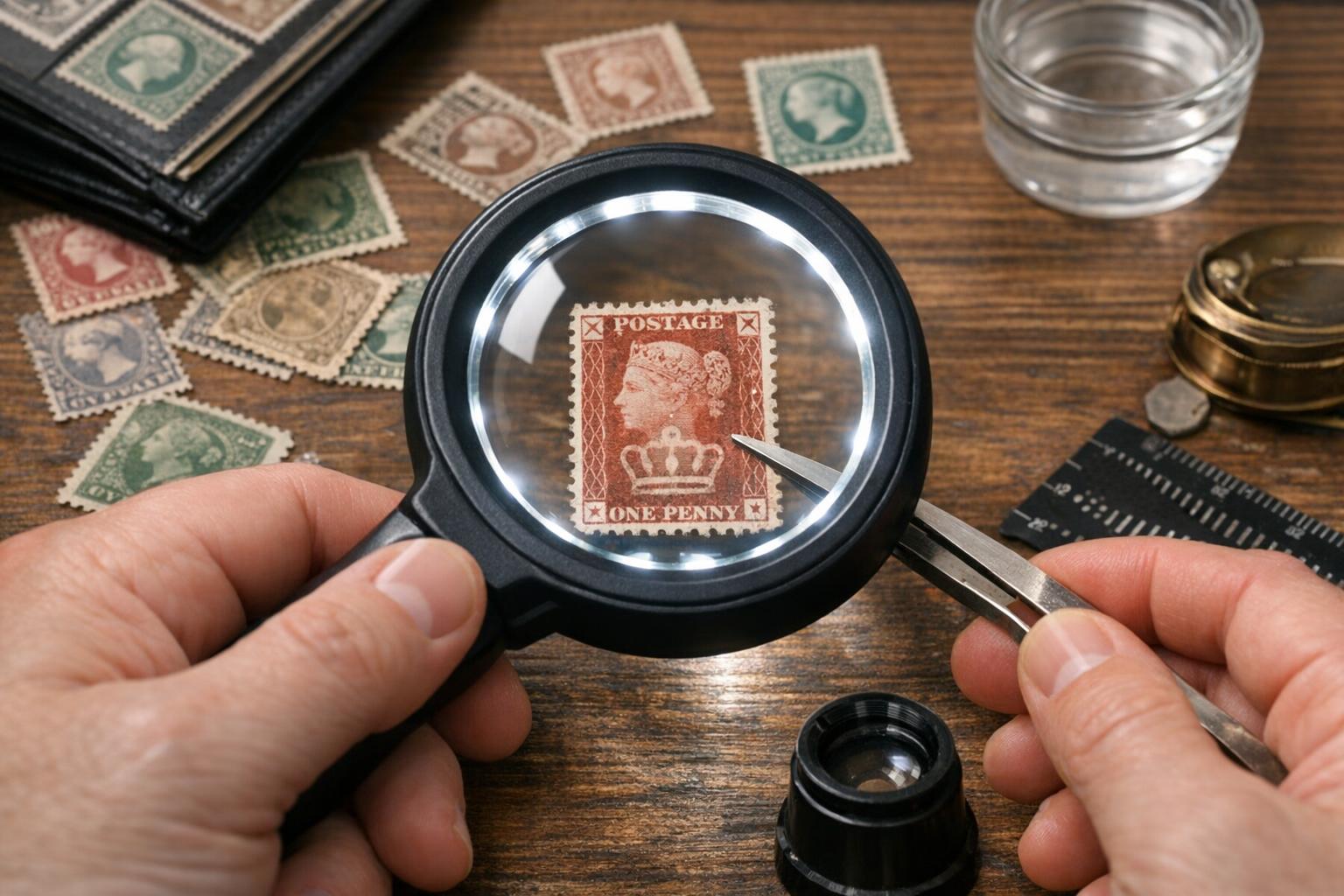
Watermarks are one of the small details that can change a stamp’s identity, its catalog listing, and its value. Two stamps that look identical from the front can be different issues entirely because of what is pressed into the paper itself. This guide covers what watermarks are, how watermarked and unwatermarked issues differ, and three reliable ways to find a watermark on any stamp without damaging it.
What a Watermark Is and Why It Matters
A watermark is a deliberate variation in paper thickness created while the paper pulp is still wet, usually by pressing a wire pattern (a dandy roll) into the sheet. Where the paper is thinner, more light passes through, so the design appears as a lighter shape under transmitted light. Postal authorities used watermarks to deter forgery, identify paper sources, and distinguish printing runs.
For collectors, the watermark is often the deciding detail. Many catalogs, including Scott, list separate numbers for the same stamp design on watermarked and unwatermarked paper, and the price difference between the two can be enormous. United States stamps used double-line and single-line USPS watermarks between 1895 and 1916; identifying which one you have (or confirming there is none) is a routine step in identifying classic U.S. issues.
Watermarked vs. Unwatermarked: The Key Differences
An unwatermarked stamp shows uniform texture and translucency across the whole design when light passes through it. A watermarked stamp shows a contrast: a letter, crown, wavy line, or other shape that is lighter (or occasionally darker) than the surrounding paper.
Three practical implications follow from that difference:
- Catalog identity. A change from unwatermarked to watermarked paper, or from one watermark to another, often means a different catalog number. Check how the catalog classifies the issue before buying or selling.
- Orientation matters. Inverted, sideways, and reversed watermarks are cataloged separately for many issues, and some orientations are far scarcer than the normal position.
- Rarity and value. For some issues the unwatermarked variety is the rare one; for others it is the reverse. The watermark check is what separates a common stamp from a scarce variant that looks identical from the front.
One caution: a faint image seen in reflected light is not necessarily a watermark. Thin spots, gum disturbance, and surface dirt can all mimic one. Always confirm with transmitted light or watermark fluid before you record a stamp as watermarked.
Method 1: Watermark Fluid (the Standard Approach)
Watermark fluid is the accepted method among dealers and collectors, and it is safe when used correctly. Use only fluid made for philatelic use. Household solvents like lighter fluid or alcohol can dissolve inks and adhesives.
You will need commercial watermark fluid, a black watermark tray (or dark glass plate), soft tongs, and blotting paper.
- Work on a flat surface with good ventilation. Handle the stamp with tongs.
- Place the stamp face-down in the black tray.
- Apply a small amount of fluid, enough to wet the stamp’s back without flooding the tray.
- Wait 10 to 20 seconds. The watermark appears as a dark contrast against the paper.
- Note the design and its orientation while the stamp is wet; the effect fades as the fluid evaporates.
- Let the stamp air-dry completely on blotting paper before returning it to storage. The fluid evaporates without residue.
Practice on inexpensive stamps first so you know what to expect before testing anything valuable.
Method 2: Backlighting (No Chemicals)
For quick screening, or for fragile stamps you would rather not wet, transmitted light alone often does the job, especially on thinner papers.
You will need a lightbox or a bright LED desk lamp, a dark matte background, tongs, and a 10x loupe.
- Place the stamp face-down on the dark background over the light source.
- Adjust the light’s angle and intensity slowly; small changes can make the pattern pop into view.
- Tilt the stamp slightly as you look. Watermarks appear as lighter shapes where the paper is thinner.
- Try a white background as well; some watermarks show better in reverse contrast.
- Use the loupe to study the design, and photograph the stamp over the light if you want a record.
Backlighting is safe for routine checks but can miss faint watermarks, particularly on thick papers or stamps with heavy gum. Treat a negative result as provisional until confirmed with fluid or a detector.
Method 3: Electronic Watermark Detectors
Electronic detectors press the stamp against a viewing surface and use controlled light and contrast enhancement to reveal the pattern with no fluid at all. They are the most consistent option for research-grade identification and for dealers who check watermarks in volume. Power on the device, position the stamp per the manufacturer’s instructions, and compare the enhanced image against a watermark reference chart. The main drawback is cost, so most hobbyists start with fluid and a tray.
Reading and Recording What You Find
Identify the design (crown, letters, lines), its orientation (normal, inverted, sideways, reversed), and its clarity, then match it against the watermark illustrations in your catalog. Record the detection method along with your findings so the result can be reproduced. On multiples, note whether the watermark runs continuously across the panes, which can point to plate and paper varieties.
When to Get an Expert Opinion
If the watermark determines whether your stamp is a common issue or a major rarity, have it confirmed. Accredited expertizing services can certify watermark type and orientation, and a certificate materially helps when you sell. This is the same standard we apply when we appraise collections: the watermark check is quick, but on the right stamp it changes everything.
Have stamps you suspect carry a scarce watermark variety? Get a stamp appraisal and we will confirm what you have and what it is worth.