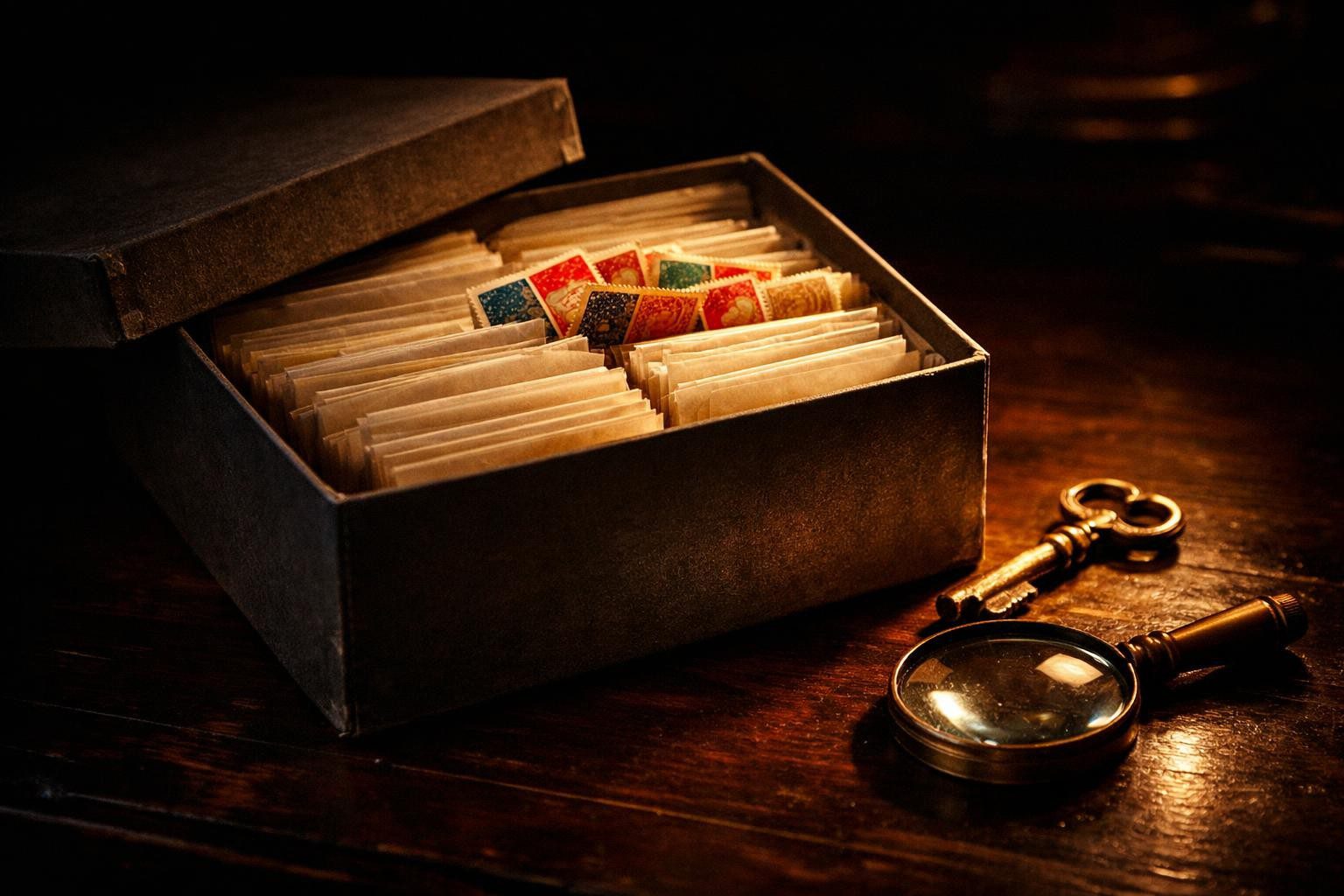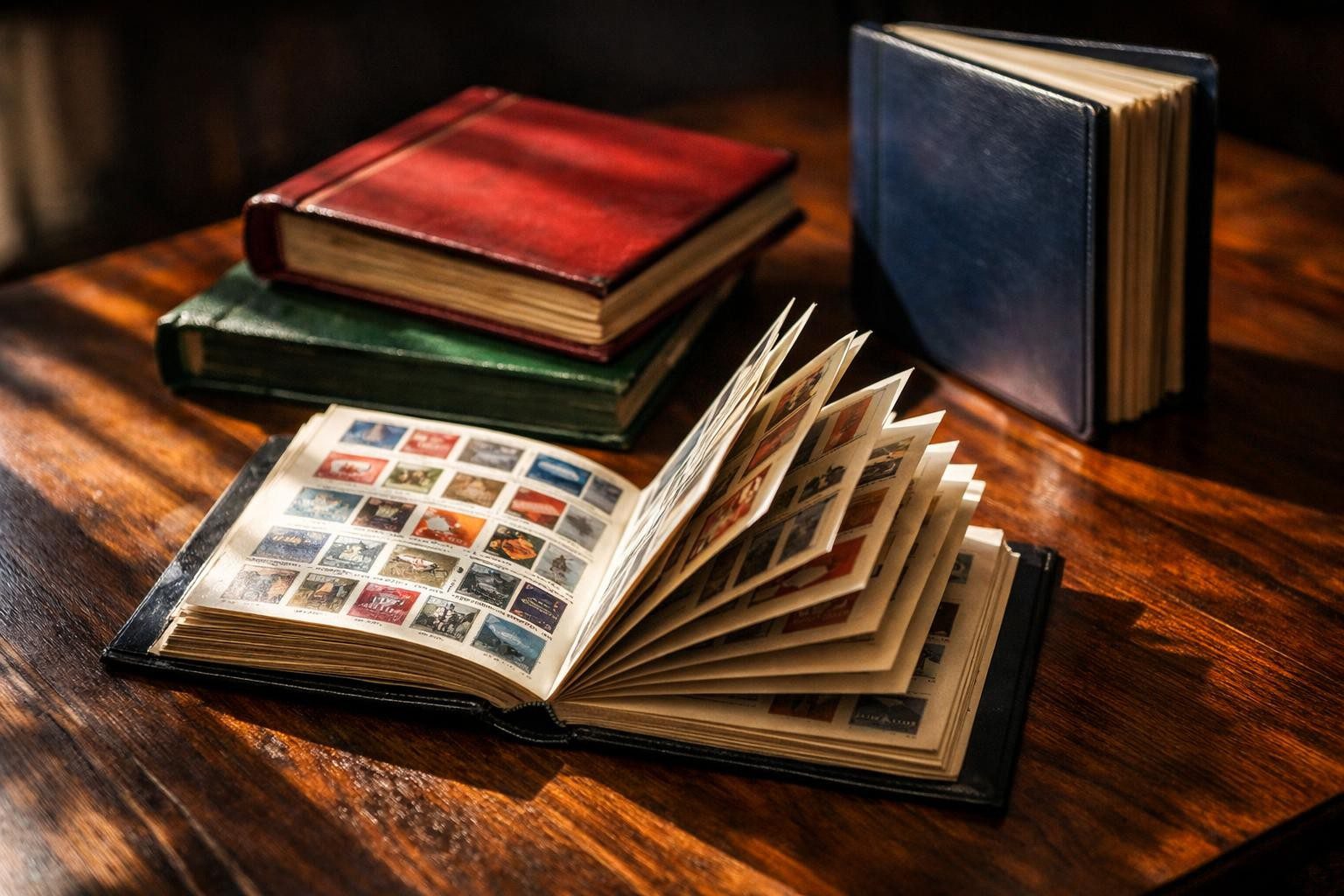
The majority of damage to inherited collections was not done by the original collector. It was done afterward by a garage, an attic, a basement, or even by a well meaning relative who has packed everything up into sealed plastic tubs to keep them safe.
This is probably the only area of stamp collecting where doing nothing is usually better than doing the wrong thing. These are the major failures that cost money, roughly in order of frequency.
Humidity Does More Damage Than Any Other Factor
Humidity is the primary cause of avoidable damage to stored stamps, and humidity causes damage through two separate mechanisms. Gum on unused stamps absorbs moisture from humid air, and gum that has absorbed moisture becomes tacky and then adheres to whatever surface it is resting against. Paper absorbs moisture from humid air as well, and paper that has repeatedly absorbed and released moisture develops the brown discoloration known as toning.
A stamp whose original gum has stuck to an album page has lost the characteristic that unused material is valued for, and the loss is permanent. Attempting to separate a stamp that has adhered to a page almost always produces a thin spot in the paper, and a thin spot is itself a condition defect that reduces value independently.
The relative humidity for the storage of paper collectibles should be between 40% and 50%. This is the relative humidity in a typical interior closet in a heated and cooled house during most of the year in most American climates. However, garages, attics, basements, and outbuildings do not have relative humidity in the 40% to 50% range and are the locations of most of the moisture damage that we see.
The recommended temperature for paper collectibles is roughly 60 to 72 degrees Fahrenheit, held steady. It is important to maintain a steady temperature as well. Fluctuations in temperature over a short period of time can cause great damage to paper collectibles because of the moisture that can enter and leave the paper. This would be worse than the upper limit of the temperature range being maintained at all times.
Sealed Containers Make Humidity Worse Rather Than Better
There are many people who have inherited stamps and are recommended to use airtight plastic containers to store them. These containers are actually poor for storing stamps as they trap the moisture in the air at the time of sealing, and this moisture cannot escape. Over time, the moisture trapped against the paper of stamps will cause them to tone, and in warm conditions, can even cause mold.
Stamps benefit more from containers that allow some air exchange than from closed containers. A cardboard box placed on a shelf in a closet in a climate controlled room works much better than a sealed tub placed in an unheated space, although it seems less safe.
Light Fades Ink And The Fading Cannot Be Reversed
Printing inks used on stamps fade on exposure to light, and ultraviolet light accelerates the fading considerably. Certain colors are markedly more fugitive than others, with the oranges, reds and purples used on many nineteenth and early twentieth century issues being particularly vulnerable to light exposure.
Fading is cumulative and irreversible. Once a stamp is displayed in a frame on a wall, it is exposed to light continuously for as long as it remains in the frame. The color loss that accumulates over several years cannot be repaired. Stamps of genuine value belong in closed albums in dark places. High quality reproductions can be displayed in their place.
Adhesive Tape And Self Adhesive Pages Destroy Value Outright
The effect of pressure sensitive adhesive tape on stamps is immediate and progressive. Over time, the adhesive in the tape will migrate into the paper of the stamp. It will also stain the paper permanently. Removal of the tape will typically remove some of the paper on the stamp as well. As a result, stamps that have been taped are treated by the stamp market as damaged, regardless of what the stamp would be worth if it were not damaged.
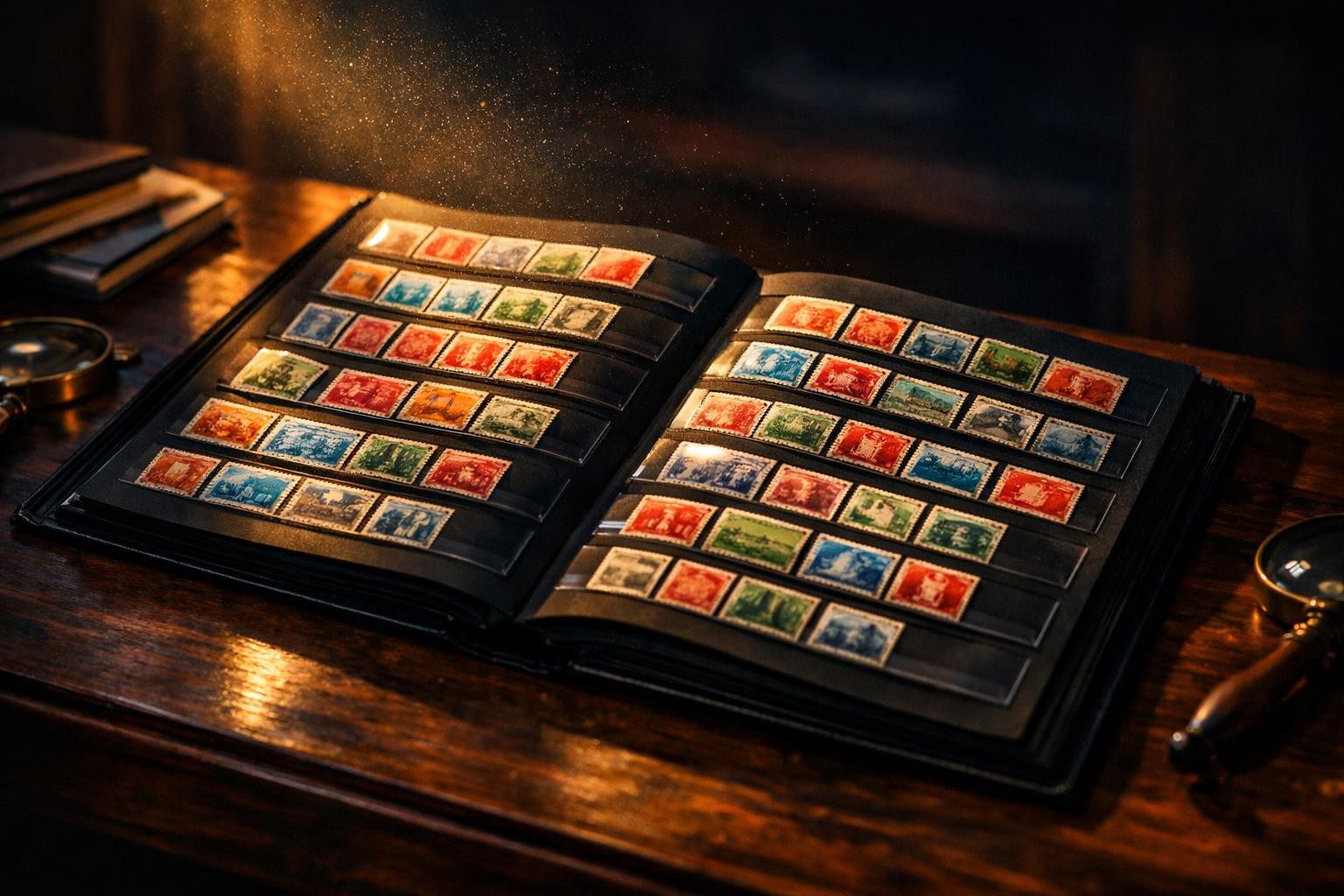
Self adhesive photograph albums, made during the 1970s and 1980s, can be a major problem when dealing with a collection. Many collectors used these albums for their stamps, and the adhesive sheet under the clear film bonds more and more to anything resting on it. This can result in every stamp in the album being stuck to the page.
PVC In Older Plastic Mounts And Sleeves
Plastic storage products made before archival standards were widely adopted often contained polyvinyl chloride. Polyvinyl chloride releases plasticizers as it ages, and they leave an oily residue. In many cases, it can transfer to other objects held in contact with the plastic. Such is the case with stamps stored for decades in sleeves that contain polyvinyl chloride. Removing the greasy film from the stamps can cause more damage than good.
Modern storage products described as archival, acid free or PVC free avoid this problem. If older plastic pages have become cloudy, brittle or sticky, the contents must be removed from them.
Handling, Which Is Where Small Damage Accumulates
Skin transfers oils and salts to anything it touches, and the oils and salts transferred from fingers to stamp paper remain on the paper. Stamp tongs are used in place of fingers for that reason, and stamp tongs with smooth rounded tips are used in preference to pointed tweezers because pointed tips puncture paper.
The weakest part of any perforated stamp is the perforation itself. Usually it is damaged when a stamp is removed from an album page or from a stamp mount. A short perforation tooth is a condition defect that is recorded on expert certificates and reflected in realized prices.
A Maintenance Routine That Catches Problems Early
Deterioration of stored material occurs over a long period of time and the deterioration which occurs over a long period of time is only reversible until it becomes established. A collection of material inspected once or twice a year will reveal early toning, early gum tackiness and early plastic degradation at a stage where the material can still be moved to better storage. A collection of material inspected once a decade will reveal the same problems after the deterioration has already caused damage to the material.
An inspection consists of opening the albums in good light and looking at a sample of pages across the collection rather than examining every stamp. The indicators worth looking for are brown discoloration appearing on the reverse of stamps or on the album page, any stamp that has begun to adhere to the page beneath it, any plastic sleeve or mount that has become cloudy, brittle or tacky, and any hinge that has darkened. Finding any of those indicators means the storage conditions rather than the individual stamp require attention.
Watch: Why Orange Stamps Turn Brown
If The Collection Is Already Damaged
Do not try to fix it. Soaking, pressing, bleaching and tape removal all reduce value more often than they recover it, and work done by a non specialist is usually visible to anyone who knows what to look for.
Move it somewhere stable first, then find out what is actually there. A stamp appraisal is $49.99 for a whole collection and covers up to 20 photos, and the report tells you which parts are worth protecting properly and which parts are not worth the shelf space. If the collection arrived through an inheritance, our guide on what to do in the first week covers the order to do things in, and what actually makes a stamp rare explains why condition is doing more work in that report than age.