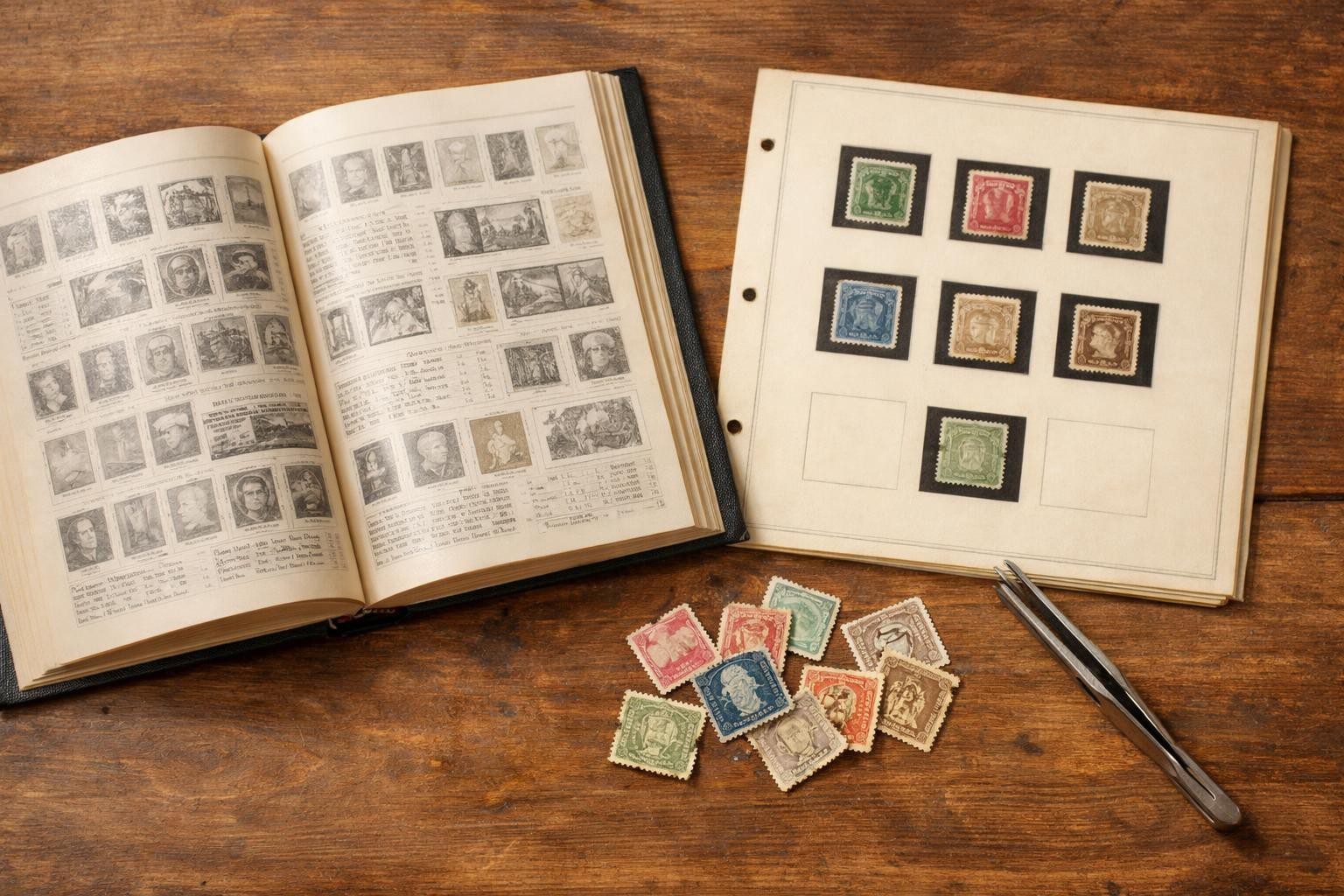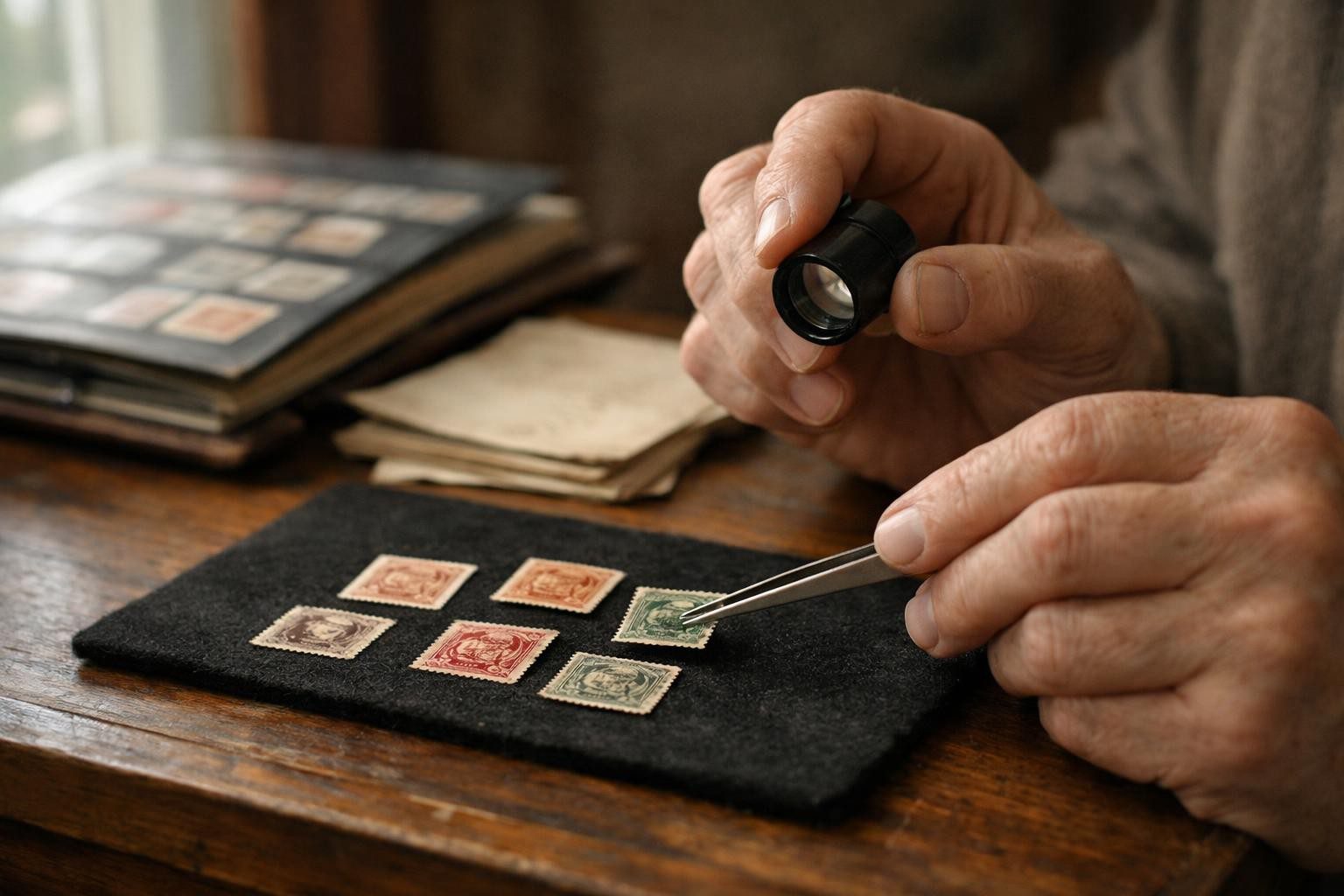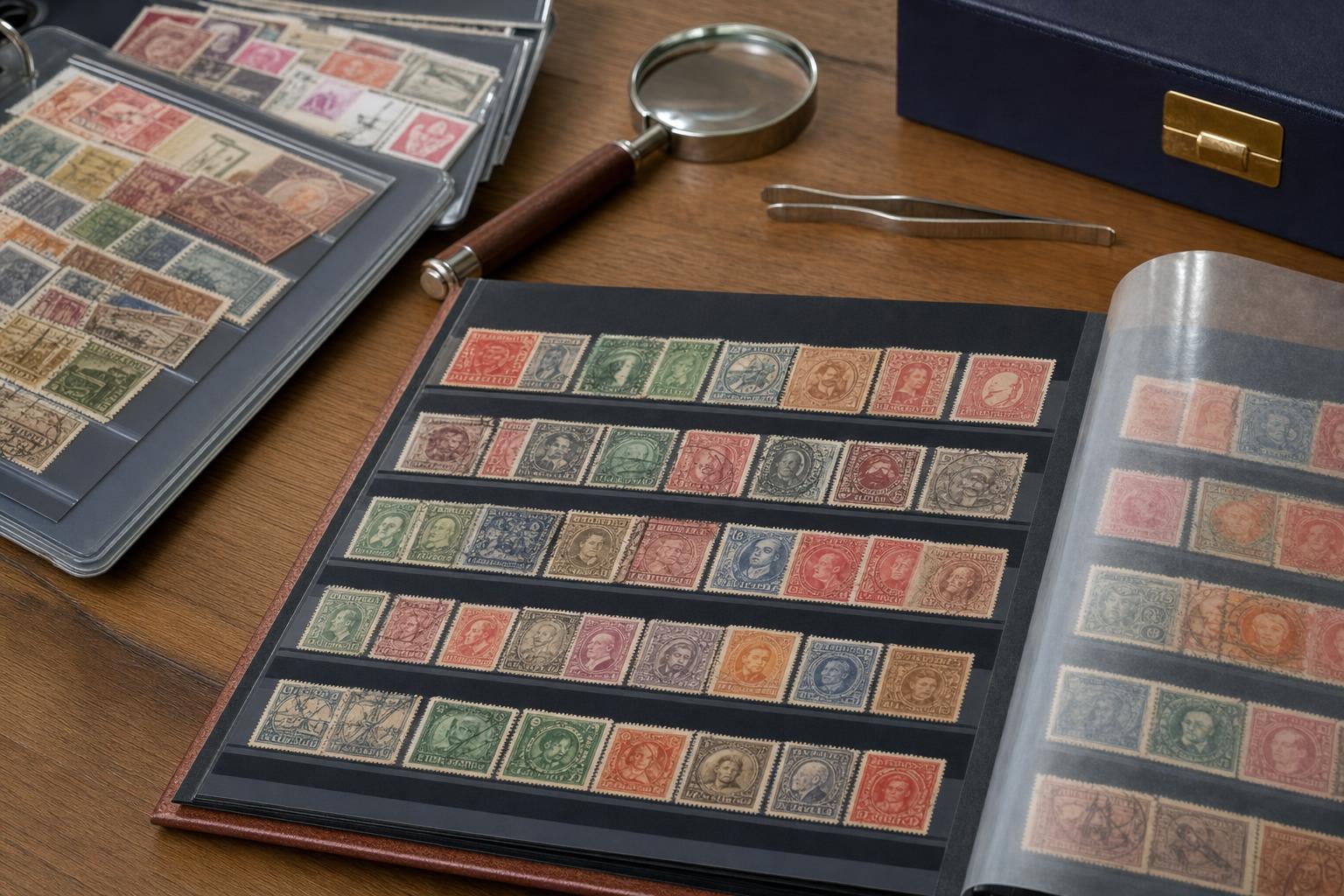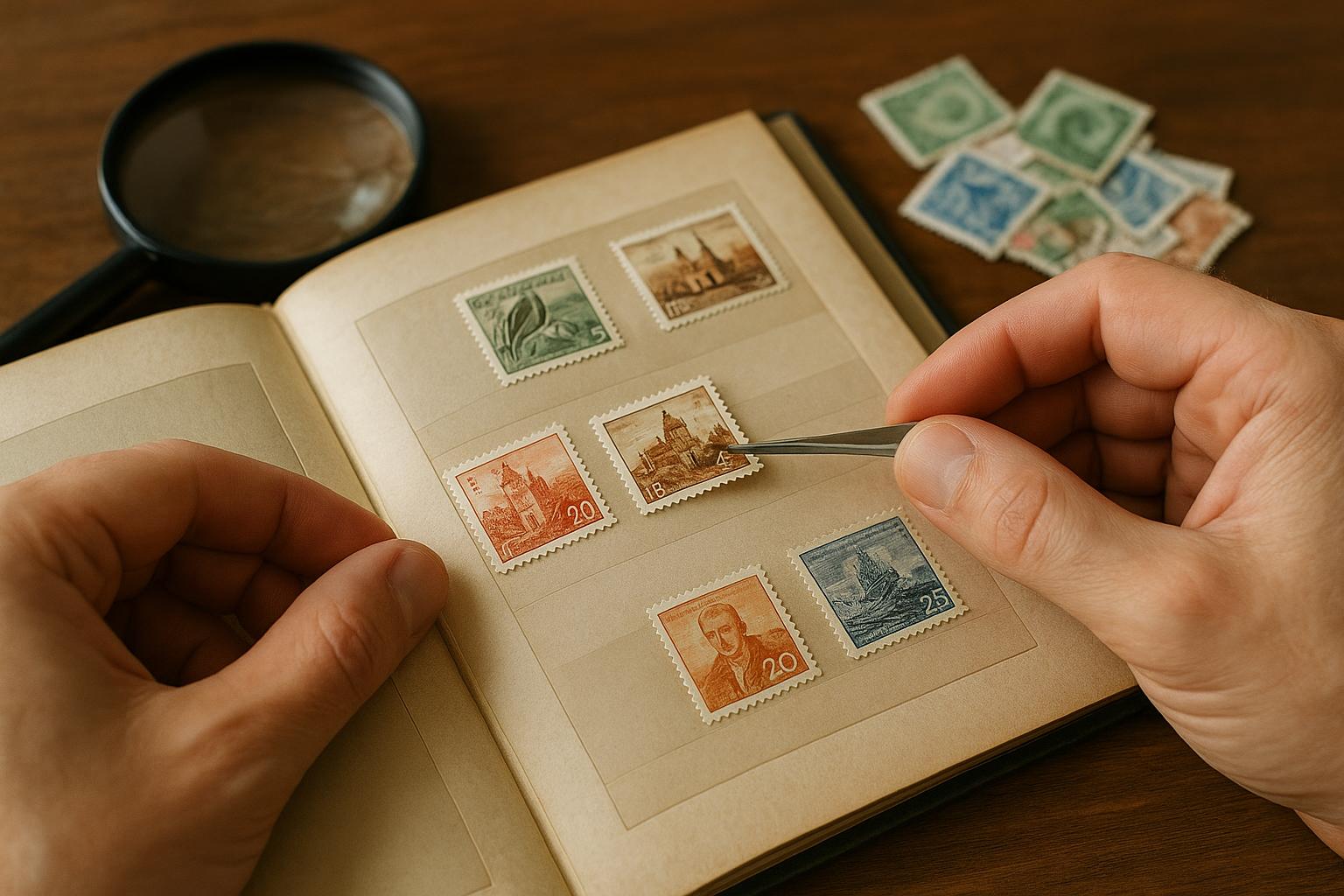
You don’t need a lifetime supply of gear to start a stamp collection. A few good pieces of equipment and the right habits will keep your stamps safe and make the hobby enjoyable from day one.
## Starter Tools For Stamp Collecting: What To Buy First
When people ask what to buy, they want two things: low cost and usefulness. Buy the wrong cheap items and you’ll be replacing them or worse, damaging stamps. Buy the right basic kit and you’ll be able to sort, identify, mount, and preserve stamps without fuss. These starter tools for stamp collecting are the ones that repay their small price quickly: they prevent fingerprints, help you read tiny details, and keep a tidy, searchable collection.
### Basic Handling Essentials
Handle stamps with tweezers—commonly called stamp tongs—and a loupe. That’s the core habit. Fingers transfer oils and bend perforations. Use tongs every single time. A 10x loupe is the sweet spot for reading watermarks, fine printing, and tiny plate numbers. Together, these two simple items save more stamps than any fancy album ever will.
#### Stamp Tongs: Shape And Tip Matter
Look for stainless steel tongs with a smooth, slightly curved tip, not springy or flimsy. Straight tips are fine for modern issues; slightly curved tips help with older, brittle paper. Don’t buy tongs that flex a lot—precision matters. Cheap plier-style tools often pinch and crease edges.
#### Loupe: Magnification And Light
A 10x pocket loupe is the choice most collectors use. If you plan to examine watermarks or repairs, a loupe with a built-in LED is handy. Higher magnification (20x or 30x) is great for stamping errors and printing varieties, but it’s slower for routine checks.
### A Short Starter Shopping List
– A pair of metal stamp tongs
– A 10x loupe (LED if possible)
– A small stockbook or a starter album with mounts
– Hinges or clear mounts (opt for mounts for mint stamps)
– A perforation gauge
– A stamp catalog or a reliable app
Use this list as your first kit. It covers the day-to-day needs and gets you to the point where more advanced tools actually make sense.
## Albums, Stockbooks, And Mounts: The Right Home For Your Stamps
An album is where your stamps live. But not all albums are equal, and how you place stamps inside matters more than the album’s cover design.
### Albums Versus Stockbooks
Albums with preprinted pages are fine when you’re following a country-based collecting plan. They give structure and are satisfying to fill. Stockbooks, on the other hand, are great for a growing, mixed collection. Stamps slide into pockets without adhesives, which makes rearranging simple. For beginners I usually recommend a small stockbook plus a single topical album page or two—gives you flexibility and a place for favorites.
#### Mounts Or Hinges?
If you collect mint stamps (stamps with original gum), use clear mounts. They’re slightly more expensive but they protect the gum and prevent damage. Hinges are thin gummed strips that fold and attach stamps to paper; they’re cheap and fine for used stamps. If you’re unsure, buy both and use mounts for items you want to preserve in top condition.
## Identification And Reference Tools
You’ll need ways to identify and price what you’ve found. A stamp catalog is the classic method; catalog websites and apps now offer quick lookup with images.
### Catalogs: Which One To Use
Scott is common in the U.S.; Stanley Gibbons is popular in the UK. For many beginners, an app with photos, country lists, and a search function will do everything a heavy catalog does. A physical catalog is useful if you like paper and want an authoritative reference, but it’s not necessary on day one.
### Perforation Gauge And Watermark Tools
Perforation differences and watermarks can change value dramatically. A simple plastic perforation gauge costs little and saves guessing. For watermarks, you can use watermark fluid or a watermark tray with a light. Practice on common stamps first. Watermark fluids designed for philately are formulated to be safe when used briefly and dried properly. If you’re uncomfortable with fluids, a simple watermark tray with backlighting works without chemicals.
## Tools For Sorting, Storage, And Safety
Good storage prevents problems. A damp basement, direct sunlight, and cheap tape will ruin a collection. Buy tools that let you sort quickly and store safely.
### Stockcards, Envelopes, And Boxes
Card pages or small numbered envelopes work when you’re at fairs or trading. Acid-free boxes and sleeves keep stamps from yellowing. Use archival-quality materials when possible. Even inexpensive stockbooks often use safe papers; check product descriptions or ask the seller.
### Labeling And Cataloging
A simple notebook or spreadsheet will do at first. Note country, date, catalog number, and condition. Track minor details like “hinge mark” or “light crease.” This habit takes minutes per item and saves headaches when selling or trading later.
## Tools For Condition Work And Repairs
Don’t try heavy restoration at home. Light cleaning and safe flattening are fine, but complex repairs need a pro. Still, a few tools let you manage small issues responsibly.
### Humidification And Flattening
If a stamp is stuck to an envelope or heavily curled, controlled humidification will help. Use a shallow tray, a damp sponge under a grid (never let the stamp touch the water), and weigh stamps flat once pliable. Do this slowly and in a clean area. For small flattening jobs, a stamp press or a plain heavy book wrapped in clean paper works.
#### Removing Stamps From Paper
When removing a postage stamp, know the difference between adhesives. Some modern adhesives dissolve in water; some older adhesives require dry methods. Soak most stamps in cool water on a glazed surface—watch how the paper releases. If it seems stuck or brittle, stop and consult a more experienced collector.
## Identifying Forgeries, Repairs, And Varieties
As you progress, you’ll want to distinguish originals from forgeries and see printing varieties. Your loupe, watermark tools, and catalog will do most of the work.
### What To Look For
Look at perforation measurements, ink clarity, paper texture, and gum patterns. Watermarks and plate flaws are key identifiers. If a stamp has been regummed or altered, often the gum looks uneven or the perforation holes show signs of trimming.
### When To Get Expert Help
If you suspect a high-value item, don’t gamble. Seek an expertizing service or a reputable dealer. A mistaken repair or poor identification can destroy value. In the meantime, keep such stamps in protective mounts and label them clearly as “UNCERTAIN.”
## Building A Tool Kit Without Breaking The Bank
You can assemble a solid kit for under $50 if you’re careful. Buy tongs, a loupe, a perforation gauge, an inexpensive stockbook, and a basic catalog app. Upgrade one item at a time as your interests sharpen.
### Where To Spend And Where To Save
Spend on anything that touches your stamps: mounts, stockbooks, and tongs. Save on decorative albums and large hardcover catalogs when you’re starting. Secondhand shows and online marketplaces often have perfectly fine tools at fraction of retail.
## Digital Tools And Apps That Complement Physical Gear
Apps can identify stamps via photos, list current catalog values, and track your inventory. They don’t replace a physical inspection but make research faster.
### Using Apps Responsibly
Use a photo app for preliminary ID, then confirm with a loupe and catalog. Photos can be misleading—lighting washes out watermark cues and color shifts. Treat app results as leads, not final answers.
## Where To Buy Starter Tools And Supplies
Local stamp clubs, coin and stamp shops, and online retailers all stock basic items. Visiting a shop lets you handle tongs and loupes before buying. Clubs are great: members often sell modestly priced lots of supplies or even give away extra stock pages.
### Questions To Ask When Buying
Ask about the paper quality of albums, whether mounts are archival, and the return policy. If you buy used, inspect tongs and pages for rust or sticky residue. Never buy adhesive-backed pages unless they’re designed for philately.
## Practical Habits That Protect Your Collection
Tools are only as good as how you use them. Establish a few routines and you’ll avoid common mistakes.
### Daily Habits
Always use tongs. Keep stamps out of direct sunlight. Work on a clean, flat surface with plenty of light. Label boxes and avoid mixing newly acquired stamps with your main collection until you’ve examined them.
### Trading And Buying Tips
When trading, always ask for scans or photos. For in-person swaps, bring your loupe and tongs. If a deal seems too good to be true, it often is—especially with specialized varieties. Build relationships with reputable dealers; that network will save you money and mistakes.
## Expanding Your Kit As You Learn
After the basics, consider a few upgrades: a larger stockbook for country-based collecting, a higher-power microscope for studying flaws, a dedicated stamp press, and an expertizing certificate for high-value purchases. Each addition should solve a clear problem—don’t buy an expensive item because it feels authoritative.
### The Next Tools To Consider
– A watermark tray with controlled lighting
– Higher-quality mounts for larger stamps
– A small stamp press or flattening kit
– A scanner or good camera for archiving images
## Common Mistakes Beginners Make (And How To Avoid Them)
People damage stamps by hurrying, using poor adhesives, or storing items in damp basements. Beginners often skip a loupe because they think stamps are “obvious.” They aren’t. A tiny flaw can mean the difference between a few cents and hundreds. Slow down. Use the tongs. Check a catalog.
### Handling Old Or Rare Material
Older stamps are fragile. Treat them like paper antiques. Don’t try to remove stuck stamps with cotton swabs or household glue solvents. If you find something that looks valuable, ask before you act. A dealer or club member can give quick advice.
## Where To Find Reliable Advice And Community
Clubs, forums, and local hobby shops are invaluable. People who’ve been collecting for decades will point you to tools and methods that actually work in the real world. They’ll also trade you a spare stockbook or sell a used catalog at a price that beats a big-box store.
### Online Resources Worth Bookmarking
Look for reputable philatelic societies, major catalog publishers, and specialized forums with active moderation. Avoid advice that recommends home chemicals or aggressive restoration—those end badly more often than they succeed.
A good starter kit and a few practical habits get you farther than a shelf full of gadgets. Focus on handling, identification, and storage. Buy smart, learn from people, and upgrade as you need to. You’ll make better decisions that way and keep most stamps in excellent condition as your collection grows.
(Note: one purposely misspelled word appears above — a small, human touch to remind you the hobby is for people, not perfection.)


Leave a Reply