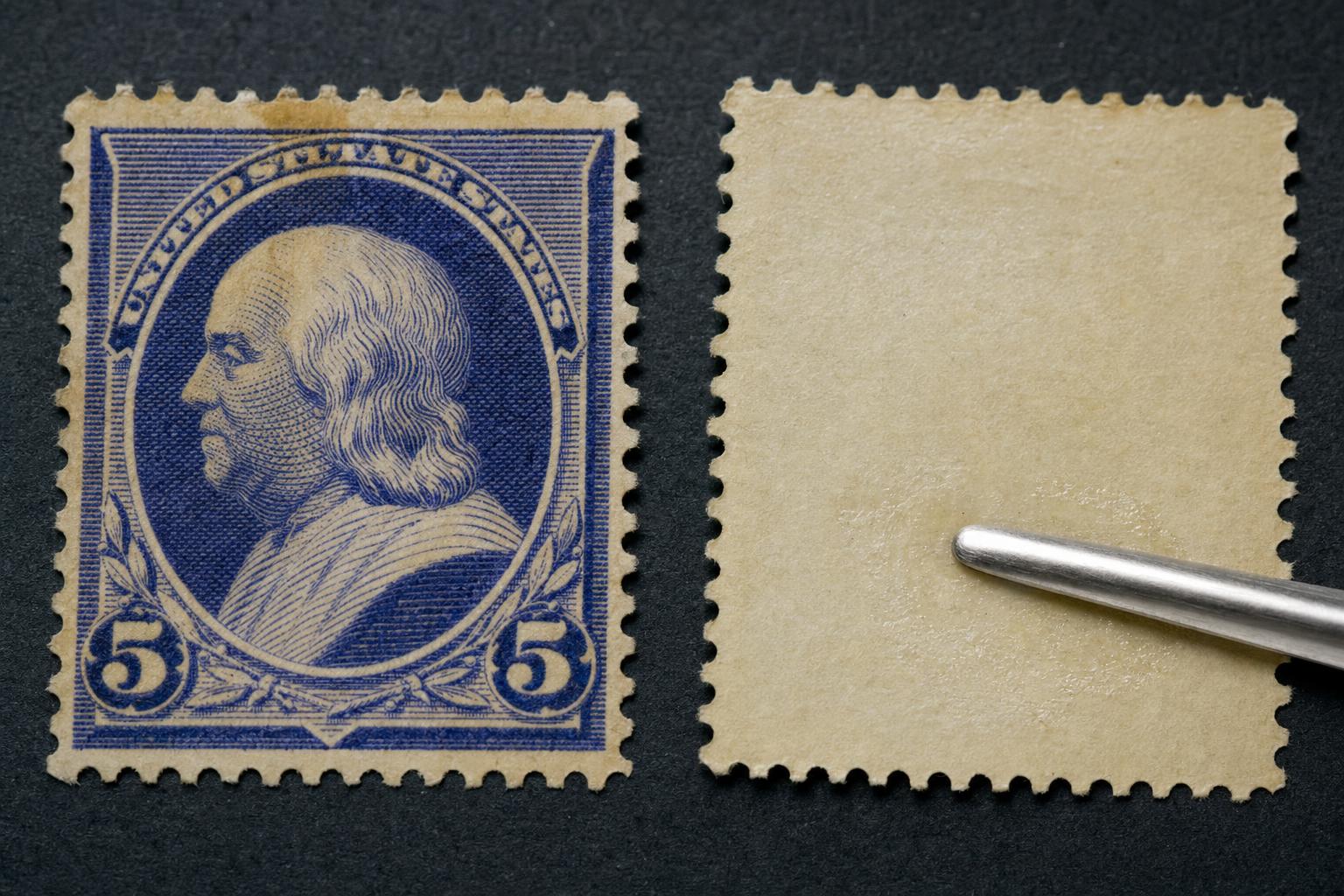
Regumming on stamps is the single most common alteration I see at shows and online. People do it for profit, to try to turn a hinged, thinned, or used stamp into something that can be marketed as “mint never hinged.” That’s the short version. What follows is what actually matters when you’re buying, selling, or trying to spot a fake.
## How Regumming On Stamps Is Done
Regumming on stamps means applying a new layer of adhesive to the back of a stamp. There are two typical motives: to restore the look of a mint stamp that lost its original gum, or to convert a used or hinged stamp into something that looks unused. The technique ranges from amateur to highly skilled. A hobbyist might brush a watery starch or gum arabic mix on the back with a soft brush. Professionals use controlled coatings, modern adhesives like PVA, or even rebacking—gluing a second sheet of paper behind the original and then adding new gum to that.
The actual process often involves cleaning, flattening, and sometimes filling thin spots. For rare issues, some regummers will plate the gum so the surface looks like a factory application. That can fool casual buyers. That said, factory gum ages in ways that are hard to reproduce convincingly.
## Why Regumming Stamps Matters To Value
Value in philately hinges on originality. A genuine, original gum often defines a stamp’s grade. When a stamp has its original gum, it’s worth many times what the exact same stamp would be worth with regumming. Market reaction tends to be harsh. If a collector or dealer discovers regumming, the stamp usually loses most of its premium. In practical terms, a regummed example might sell for 10–30% of the price of an original mint example of the same quality.
There are exceptions. If the original gum was completely gone and the stamp is otherwise extraordinary, an honest disclosure and expert certificate might allow a buyer to pay more than they would for a used copy. But nobody pays the same premium for substituted gum as for original gum. Selling a regummed stamp as original is fraud in many contexts; at a minimum it damages trust and reputation.
### Examples From The Market
Early classics are particularly vulnerable. Victorian British stamps and 19th-century U.S. issues often surface regummed because original gum darkened or cracked. Modern stamps with bright, shiny gum are less often altered since any change is obvious. Dealers I know have seen regummed examples of 1860–1880 issues that passed initial inspection but failed when examined under raking light and magnification.
## How To Spot Regummed Stamps
You don’t need a lab to catch many regumming jobs, but you do need patience and the right checks. Start with a 10x loupe and a raking light. Look at the perforation tips. Original gum typically thins and may not extend uniformly to the very edge; regumming often pools over the perforation tips or forms a thin ridge where the gum meets the paper edge. Also watch the color and gloss. Original gum from the 19th century usually has a matte, slightly crazed appearance; fresh gum tends to be glossy and glassy.
Examine the surface for brush strokes, tiny bubbles, or an inconsistent sheen. If the gum covers flaws on the back—like hinge remnants or paper fibres that should show through—be suspicious. Under ultraviolet light, modern adhesives often fluoresce differently than old gum. A definitive check is microscopic inspection of the gum’s surface texture and how it meets the paper fibers.
### Subtle Signs Experienced Collectors Use
– Gum Line Behavior: Original gum usually follows paper fiber contours. New gum can sit on top like a film.
– Perforation Pooling: New gum sometimes collects in perforation holes or shows raised edges.
– Edge Coloration: Old gum can discolor slightly along edges; freshly applied gum is often uniform.
– Soak Test: Soaking a stamp in water to see how the gum dissolves is reliable but destructive if you want to keep the stamp mint. Dealers use it selectively.
– Certificates: Expertising bodies issue opinions that note regumming. Certificates carry weight with buyers.
## Tools And Tests Professionals Use
Dealers and expertizers rely on tools beyond a loupe: scanning electron microscopes aren’t typical, but stereo microscopes at 30–100x are. Raking light, UV lamps, and chemical reagents that react to starch or PVA adhesives are common. When necessary, experts will perform a careful soak and examine the way the gum dissolves and how the paper reacts. That’s not something to do on a display piece without permission.
Authenticating services like major societies will not only spot regumming but also attempt to determine whether an altered stamp was treated to deceive. Certificates will state “regummed” or “gum appears to be original” and this language dramatically affects auction estimates.
### When Regumming Is Hard To Detect
High-quality regumming can fool buyers for years. If the regummer matched the shade, texture, and application method, it can look right even under moderate magnification. That’s where provenance, expert certificates, and a trusted dealer’s due diligence matter. Provenance that traces a stamp back through reputable hands reduces the chance that a late-stage regumming went unnoticed.
## Buying Tips To Avoid Getting Burned
Always ask for clear photos of both sides and request magnified images of perforation tips and the gum surface. If a deal seems too good to be true, it probably is. Prefer stamps that come with documentation. If you’re buying expensive mint stamps, insist on an expert certificate or buy from a dealer who will refund upon later expert detection. Learn how raking light reveals surface contours and practice with known originals to sharpen your eye.
Regumming stamps is a persistent problem in certain collecting areas. It has cost many collectors money and left veterans cautious. Learn the signs, use the tools, and treat bold claims of “pristine original gum” with skepticism unless backed up by evidence. A lot of the time, the telltale signs are small and easily missed by buyers who are excieted or rushed. Be slow. Take your time. Reallly look closely. If something odd has occured, get a second opinion or an expert certificate.
Leave a Reply