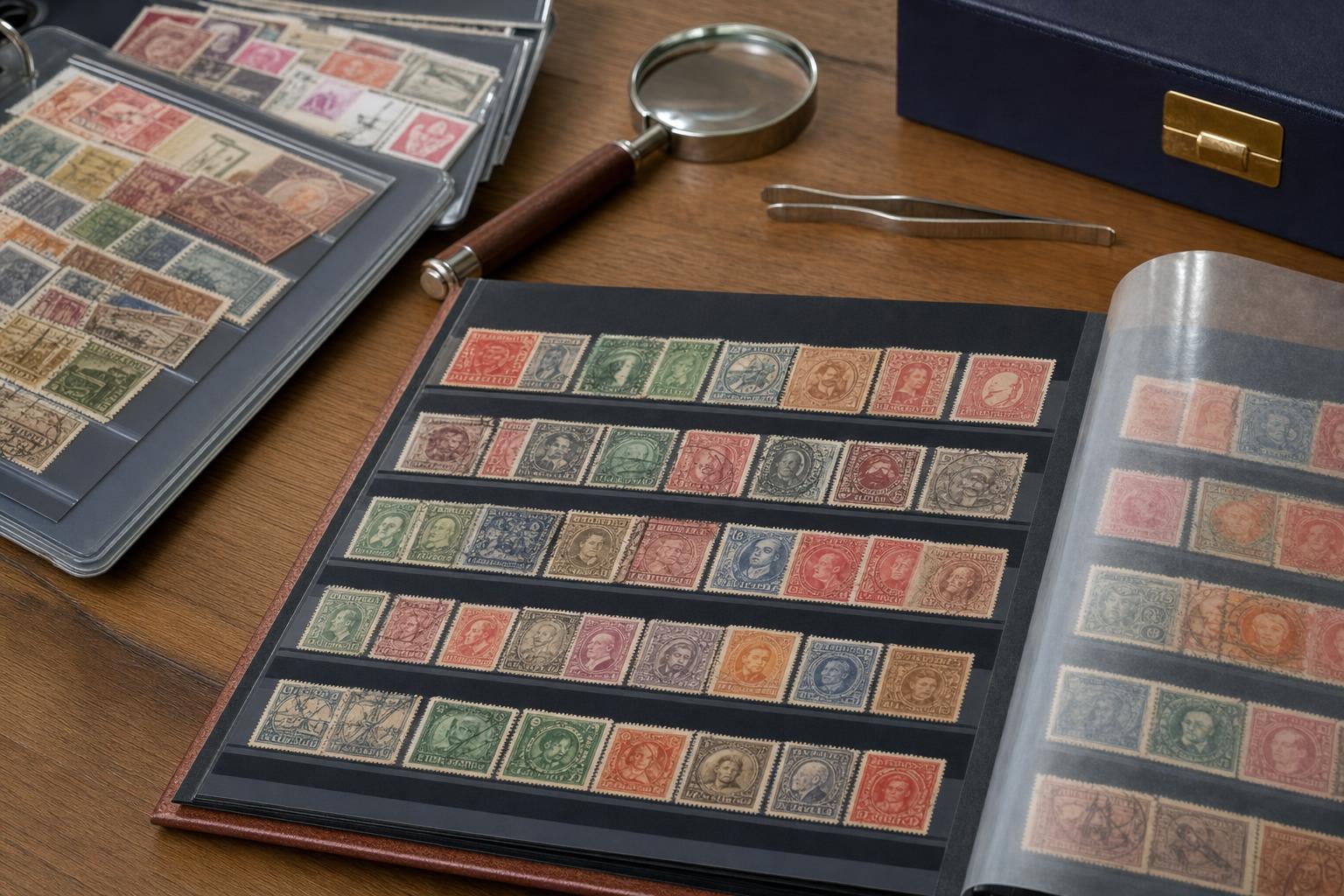
Paper is fragile, gum is reactive, and inks fade. Stamp storage is the practice of slowing all three down. This guide consolidates everything that matters about storing and handling a collection: the environment, the materials, the handling habits, and the specific threats of humidity and sunlight that quietly ruin more collections than any accident does.
The Environment: Cool, Dry, Dark, and Stable
The target is roughly 60 to 72 degrees Fahrenheit and 40 to 50 percent relative humidity, held steady. Stability matters as much as the numbers; repeated swings make paper expand and contract and gum cycle between tacky and brittle. That rules out attics, basements, garages, and exterior closets. An interior closet or a room you keep comfortable year-round is the right home for albums.
Humidity is the most dangerous variable. Above roughly 60 percent RH, three things start: gum activates and stamps stick to mounts, pages, and each other; foxing (brown spots from mold and metal impurities in the paper) develops; and paper fibers weaken. A stuck-down stamp usually cannot be separated without creating a thin, which is a permanent fault. If your storage area runs humid, a small dehumidifier or silica gel packs inside the storage cabinet (recharged on schedule) solve the problem cheaply. Signs you already have a humidity problem: wavy album pages, a musty smell, stamps that resist lifting from mounts.
Sunlight is the second silent destroyer. Ultraviolet light bleaches inks and toned paper permanently; even indirect daylight does cumulative damage through a window, and some album covers and pages fade unevenly, leaving proof of the exposure. Store albums spine-out in a closed cabinet or drawer away from windows, and never leave stamps displayed in daylight. If you want to display material, use UV-filtering glass and rotate what is shown.
The Materials: Acid-Free or Nothing
Ordinary paper, cardboard, PVC plastics, and household tape all damage stamps over time; acidic materials brown the paper they touch and PVC off-gasses plasticizers that attack inks. Use albums and stock books made for philately, acid-free mounts and sleeves, and glassine or polyester (Mylar) protection. Never use pressure-sensitive tape or ordinary glue anywhere near a stamp. For long-term flat storage of covers and sheets, acid-free folders in archival boxes work well. Whether you choose hinges or mounts for album pages is its own decision with value implications; see our guide to stamp hinges versus mounts.
Handling: Tongs, Clean Hands, and a Clear Desk
Skin oils transfer to paper and gum and show up years later as toning. Handle stamps with stamp tongs (smooth, rounded tips, never household tweezers with ridged jaws), work over a clean surface, and keep food and drinks away from the desk. Lift stamps by their edges, support large multiples fully, and move one item at a time. When soaking stamps off paper, follow safe soak procedure so you do not trade a hinge remnant for a thin; our stamp soaking guide covers it step by step.
A Simple Maintenance Routine
Twice a year, open the albums and look: check for foxing spots, stuck stamps, wavy pages, and any smell of damp. Recharge silica gel. Confirm the storage area’s temperature and humidity if you keep a cheap hygrometer, which is worth the ten dollars it costs. Catching a humidity problem in month two instead of year two is the difference between moving the albums and losing the collection.
Why Storage Discipline Pays
Condition drives stamp value more than any other factor a collector controls. Every fault that storage prevents (toning, foxing, stuck-down stamps, faded color, gum damage) is a discount avoided when the collection is eventually sold or appraised. Well-kept collections also sell faster because buyers trust what they see. If you are preparing a collection for sale, keep it exactly as it is stored now and get an appraisal before reorganizing anything.

Leave a Reply