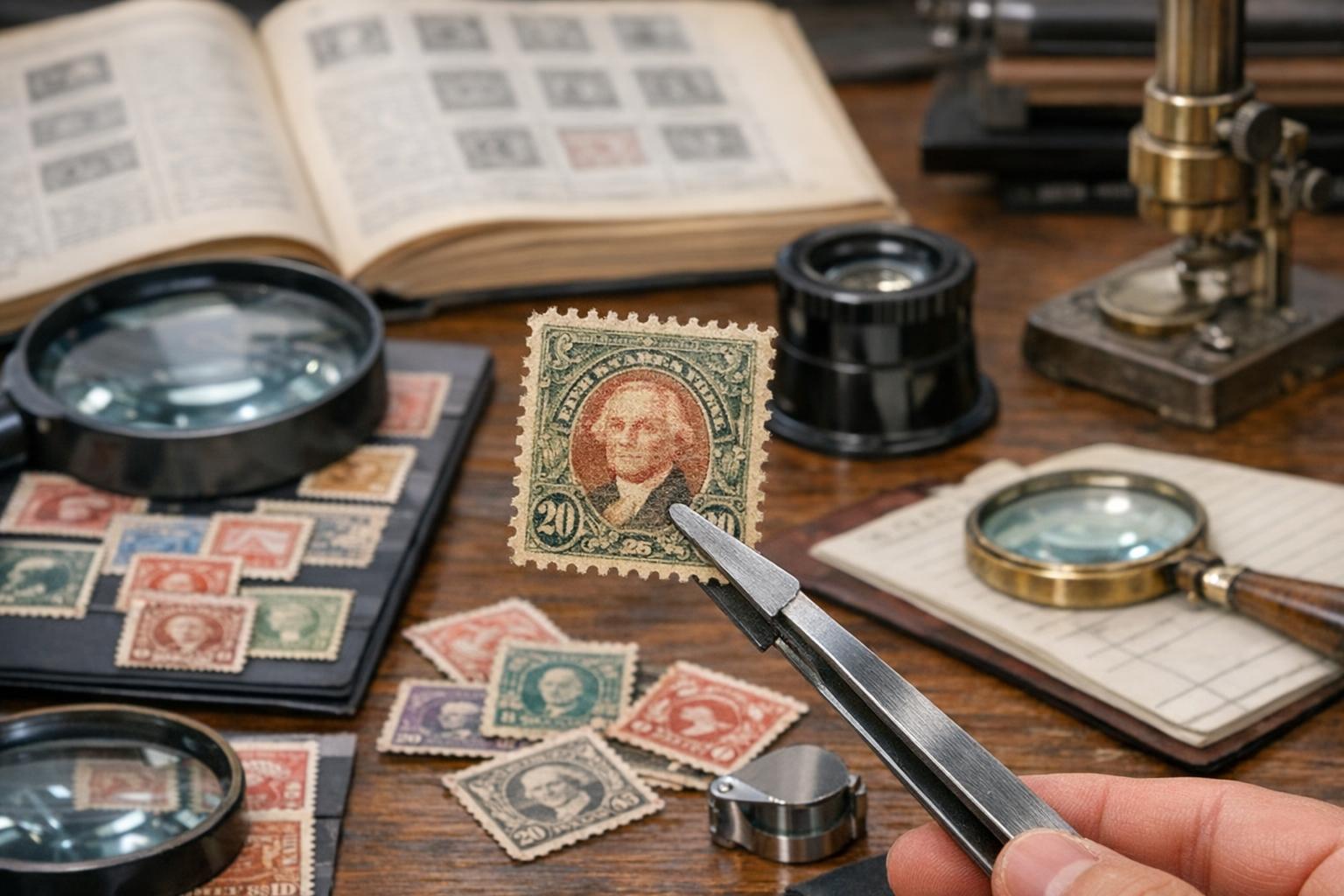
Stamps are small, stubborn objects. If yours doesn’t have a Scott number, the work falls to observation and a few tools you can buy for less than a decent coffee habit. You can still find out what it is. You just need to be methodical.
## How To Identify A Stamp Without A Scott Number: Practical Steps
Start by treating the stamp like a tiny piece of evidence. Note every mark. Country and denomination are the obvious starting points; they narrow things fast. After that, focus on these features: design details, perforations, watermarks, paper and printing method, cancel marks, and any marginal inscriptions or control numbers. Each one reduces the pool of possibilities.
### Look For The Obvious Identifiers
If the country name and denomination are printed, those matter first. English-language issues often say “Postage” or the country. But many older stamps omit the country name altogether — British colonies and early issues are common examples. When the country is present, write it down exactly. Spellings and scripts matter: a Cyrillic inscription points to a different search path than Arabic or Chinese characters.
Also take note of any overprint, surcharge, or provisional handstamp. Overprints can transform an otherwise common stamp into something collectable. Photograph the stamp at high resolution and crop the overprint — that cropped image is useful for reverse-image searches.
### How To Identify A Stamp Without A Scott Number By Design Details
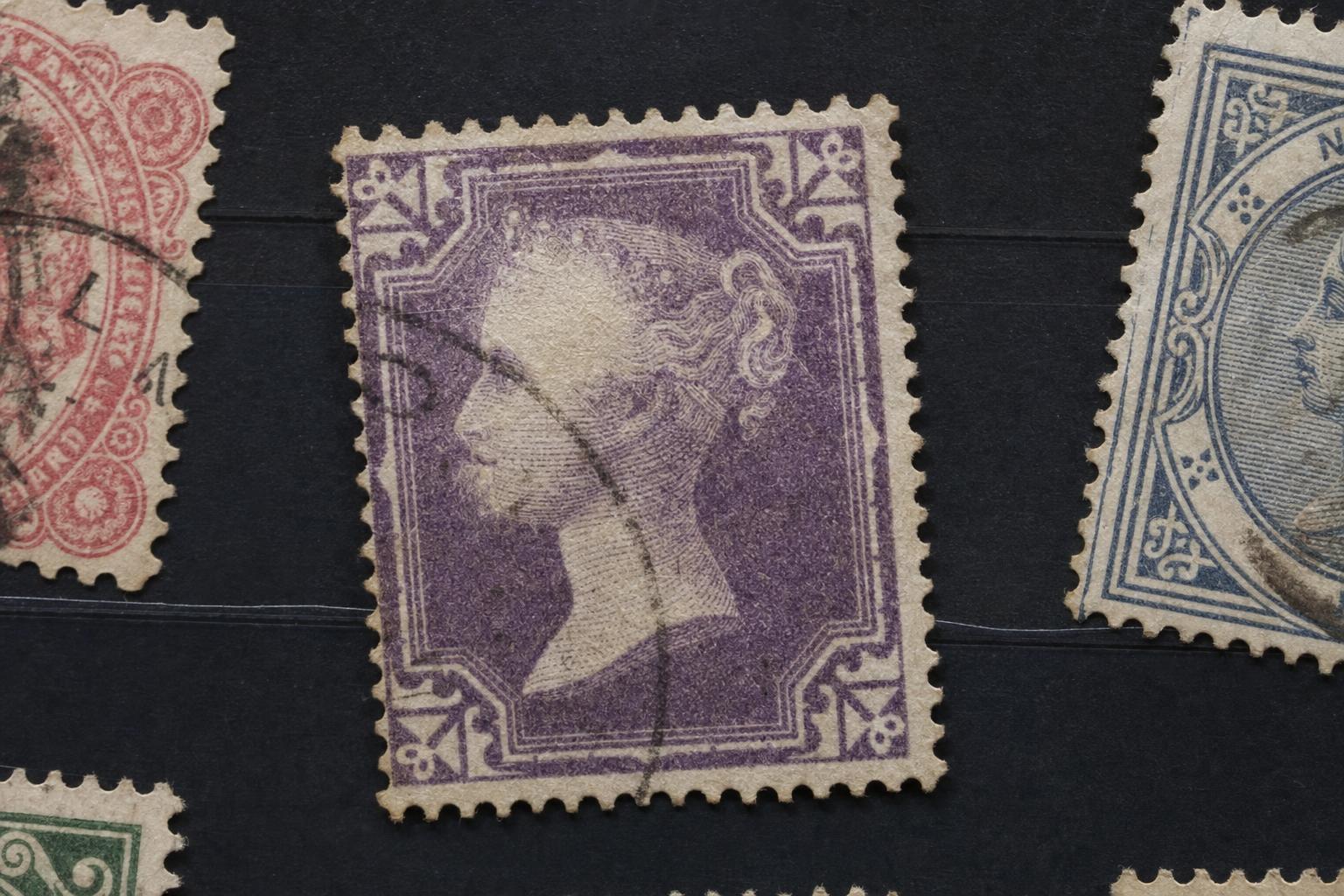
You want distinguishing design elements: portraits, coat of arms, boats, birds, architecture, and typefaces. Make a short list of three or four features from most to least distinct. For example: “green, King George V portrait, crown at top left, engraved lines behind head.” Those phrases are useful search queries. When you search in catalogs or online marketplaces, use quotes around combined descriptors to weed out noise.
#### Use Color Carefully
Color is trickier than it looks. Printing variations, fading, and lighting in photos change perceived color. If you measure color, use natural daylight or a color card. But don’t dismiss a match because the shade is slightly off; scanning and monitors alter hues.
#### Watch For Printing Methods
Engraved (intaglio) stamps have raised ink you can feel and magnify easily. Lithograph and offset prints look flatter. The method helps narrow the era and the country — many early 20th-century stamps used engraving, while mid-century mass issues shifted to offset.
## Tools That Make A Big Difference
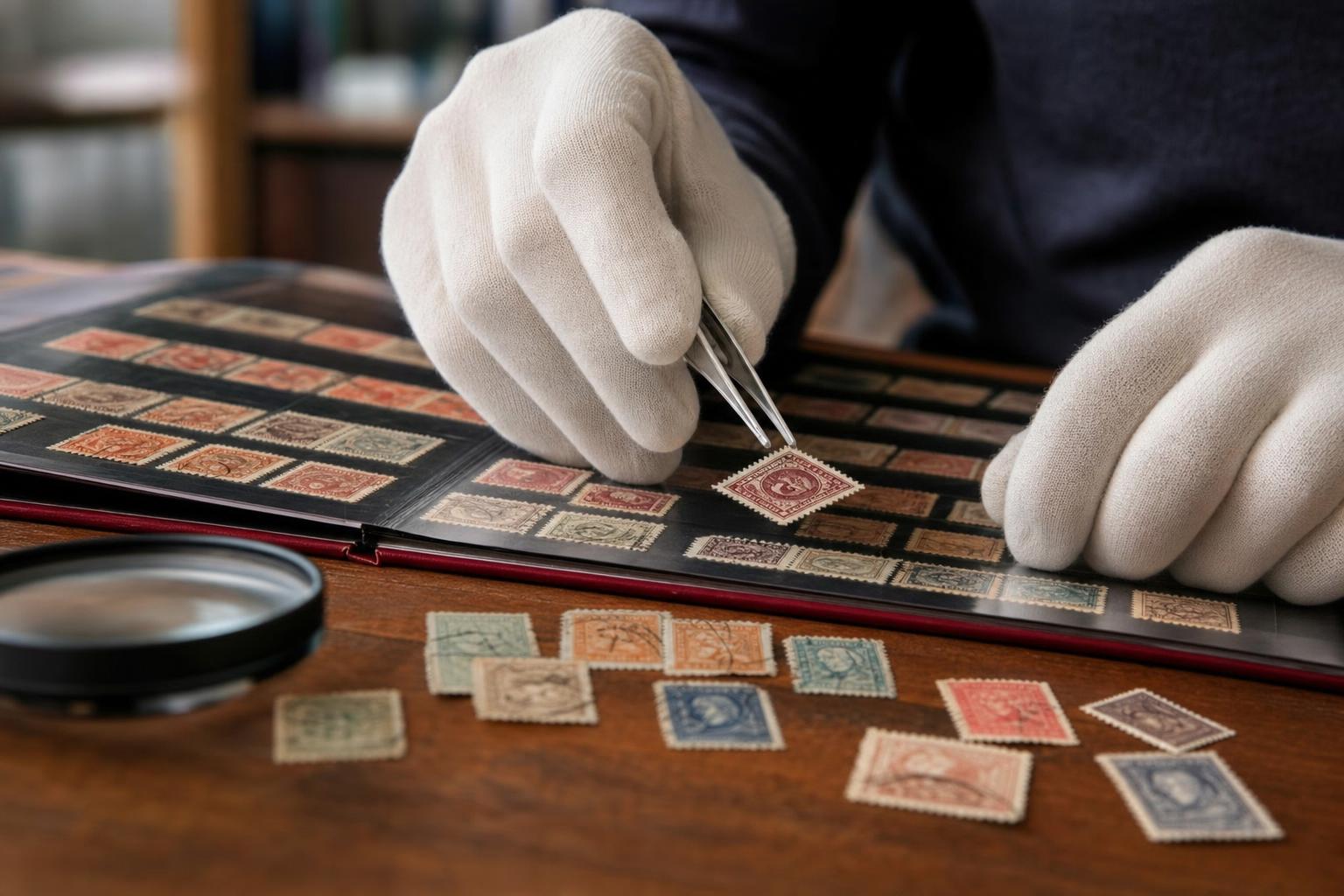
You don’t need an expert microscope. A loupe (10x), a perforation gauge, a watermark detector or tray, a small UV lamp, and a pair of tweezers are the core kit. A cheap magnifier and a sheet of clear glass also work in a pinch.
### Perforations And How To Read Them
Perforation measurement is a reliable fingerprint. Use a perforation gauge to count how many holes or teeth across 2 centimeters. Notate it as “perf 11” or “perf 11½ x 10½” if uneven. Many stamps come in multiple perforation varieties; catalogs index those separately with different scott number suffixes or letter codes.
### Watermarks: Subtle But Useful
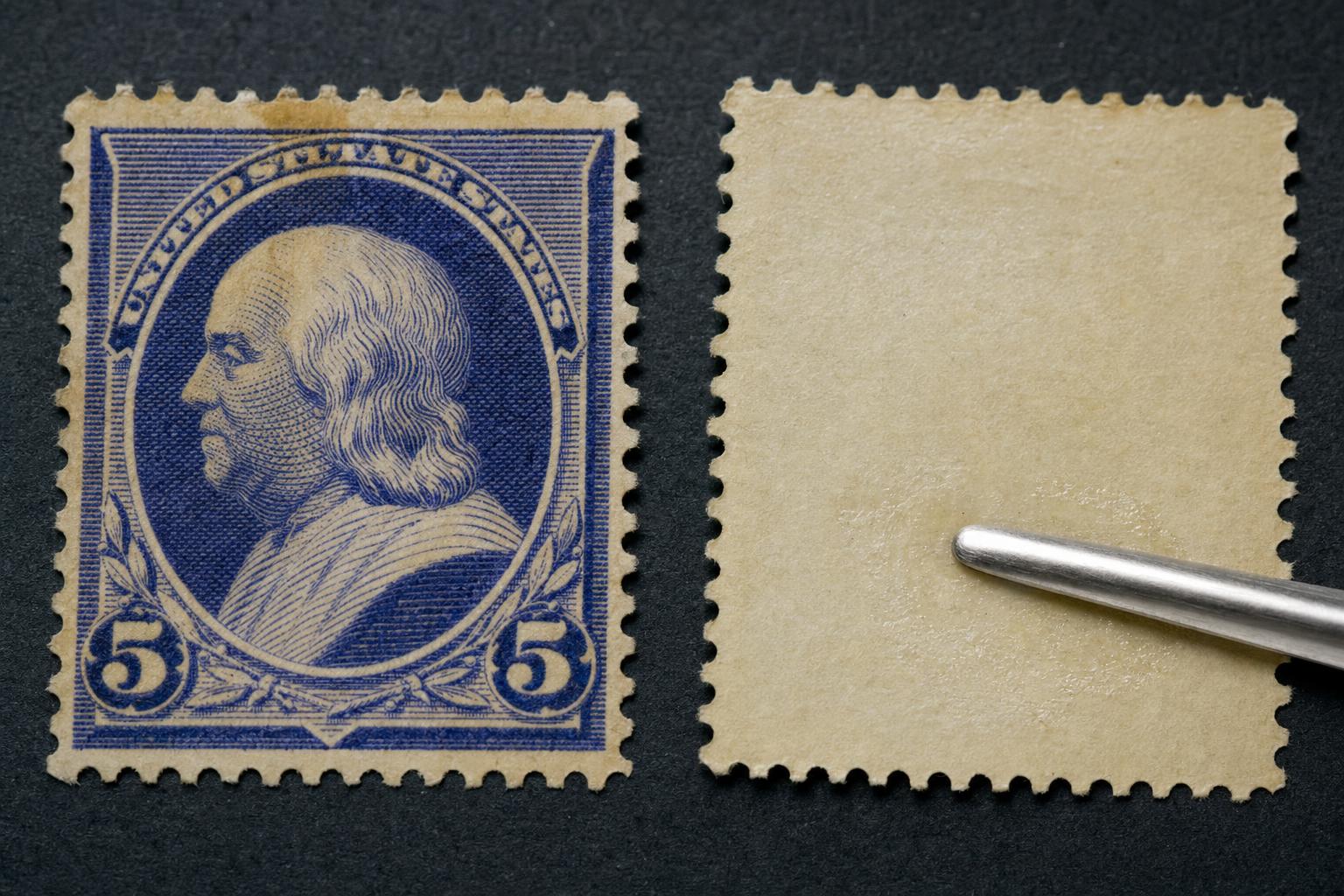
Watermarks are often invisible until you wet the stamp — and you should avoid wetting mint gum — so use a watermark tray and fluid or a simple block of dark paper behind the stamp with transmitted light. A watermark can rule out large groups of stamps. If you can’t see a watermark, note that too; some stamps simply lack it.
#### UV Light For Paper And Fluorescence
A small UV lamp reveals fluorescent paper, tagging, and phosphor bands used by postal services. That can separate issues printed just years apart. Use UV in a dark room. Don’t overexpose a rare stamp to UV for long periods.
## Searching Without A Scott Number
This is where strategy beats brute force. Throwing the entire description into a general search rarely helps. Break it into parts.
### Create Focused Search Queries
Combine country name, color, design element, and “stamp” in search terms: for example, “Peru blue condor 1940 stamp.” Add “variety” or “overprint” if relevant. Try searching in other languages if the country uses a non-Latin script. Use image search with your photo cropped to the main design; reverse-image tools sometimes find identical or closely similar listings.
### Use Alternate Catalogs And Databases
If you can’t find a match by a scott number, use other references: Michel, Yvert, Stanley Gibbons, and regional catalogs. Many libraries and online databases index by country and issue date. The “scott number” is a common shorthand in North America, but international catalogs sometimes describe the same stamp differently. Cross-reference descriptions and images.
### Online Marketplaces And Auction Archives
eBay, Delcampe, and auction house back catalogs are goldmines for images and detailed listings. Look for high-resolution auction scans which often show plate varieties, watermarks, and gum condition. Auction descriptions sometimes list specialist catalog numbers other than Scott; jot those down.
## Tools And Apps For Stamp Id
There are smartphone apps and websites built for “stamp id”. They vary in quality. Use them for leads, not final answers. An app might identify the country or era correctly, but miss a rare variety. Treat app suggestions as a starting point for deeper catalog checks.
### Community Help: Forums And Facebook Groups
Post a clear photo and your description in a dedicated philately forum or group. Collectors often recognize regional designs instantly. Be prepared with details: size, perforation, watermark findings, and the back of the stamp if relevant. Experienced members will ask targeted questions — that’s good. Answer them. Expect follow-up requests for better photos or measurements.
#### Know When To Ask An Expert
If the stamp looks like a potential error, a scarce overprint, or something from a politically unstable period, it may deserve expertizing. Societies and professional services can certify authenticity and produce a report. Those services cost money, so use them when value and rarity justify the expense.
## Recording What You Find
Keep a log. Note the exact measurements, the tools you used, where you searched, and which catalogs or sites returned hits. That’s useful for future identifications and for selling or insuring material. A simple spreadsheet with columns for country, year (if known), size, perf, watermark, printing method, and notes works fine.
### Assigning A Scott Number Later
Once you’ve matched images and catalog descriptions, you can find the scott number. It often appears alongside images in digital catalog entries. If your match is partial (for example, you confirm the issue but not the perforation variety), record that tentative scott number with a caveat in your notes. The catalog assigns a scott number based on specific features; missing one detail can mean a different number entirely.
## Special Cases That Confuse Identification
Some stamps are tricky on purpose. Locals, provisional overprints, and war-time issues were produced in short runs and documented poorly. Revenue stamps and telegraph stamps look like postage but belong in different categories. Also watch for reprints and facsimiles which mimic designs and confuse searches.
### Stamps With No Country Name
Some countries historically left out their names — think early British or U.S. territories and postal unions. For those, look at portrait style, inscriptions like “Centavos” or “Cents,” and cancellation marks which often carry town names. Postmark towns are often the fastest route to identifying a stamp without a Scott number.
## Evaluating Value And Rarity
Identification and valuation are separate. Once you’ve identified the stamp, compare your item against images of fine quality examples. Condition, gum, centering, and repairs matter. A rare variety in poor condition might be less valuable than a common stamp in superb condition. Use auction results for recent realized prices rather than seller “asking” prices.
### Keep Notes For Future Reference
When you finally pin down an identity, save images and catalog references together. The next time you or a friend finds an anonymous stamp, you’ll have a small library of solved puzzles to consult. That pattern recognition speeds everything up.
A last, practical point: don’t get hung up on perfection. If you can’t find a scott number after a few targeted searches, you may still have everything you need to describe the stamp for sale, insurance, or a collector’s forum. Record the features, attach good photos, and label it as “identified by description, no scott number assigned yet.” That honesty helps avoid confusion later and encourages better answers from the community. Also, if you’re posting online, note that one small inscription might be mispelled on older printings — that can be a clue rather than a handicap.
Leave a Reply