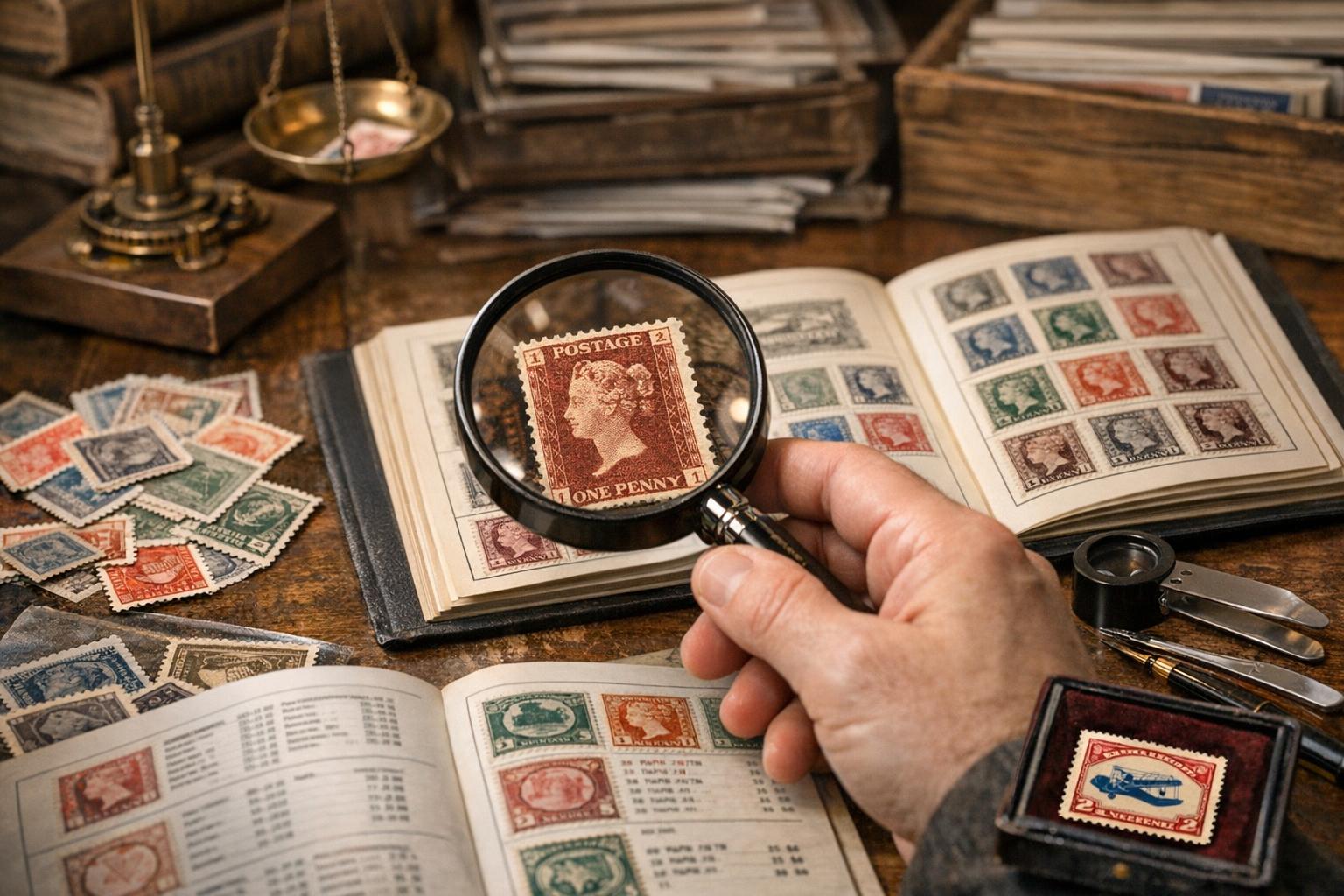
There’s a certain thrill to holding a tiny portrait or a miniature landscape that carried letters across oceans and centuries. As a value hunter, you learn to listen to the paper: the perforations whisper era, the watermark hums country, and the cancellation sings of a story. But every collector sooner or later asks the same question: how much is my stamp worth? Below are the methods, signs, and two practical remedies to help protect and possibly increase the market interest in your treasures.
## How Much Is My Stamp Worth: The First Steps A Value Hunter Takes
When you wonder how much is my stamp worth, your first tasks are observation and documentation. Clear photos from multiple angles, a note about size, and a scan of both front and back are priceless. Pay attention to centering, color vibrancy, perforation integrity, gum condition (if unused), and any cancellations. These visible characteristics heavily influence stamp value long before expert opinion arrives.
### Read The Clues: Condition, Rarity, And Provenance
Condition is king in determining stamp value. A flawless centering and bright color can elevate a common stamp into a collectible with real demand. Rarity is context-driven: production errors, limited print runs, or withdrawn issues fetch higher prices. Provenance — a documented ownership history — can add cachet, especially for historically significant stamps.
### Use Catalogs And Online Resources To Get A Ballpark
Philatelic catalogs (Scott, Stanley Gibbons, Michel) provide baseline catalog valuations. Search auction archives and online marketplaces to see realized prices rather than just asking prices. When you ask “how much is my stamp worth,” remember that catalogs are guides; actual stamp value is what buyers pay at a given time and condition.
### When You Need A Professional Stamp Appraisal
If your stamps are rare or you’re considering insurance or sale, arrange a formal stamp appraisal. A trained philatelist neutralizes bias, assesses condition under magnification, checks for expertizing marks or certificates, and compares current market data. A stamp appraisal adds confidence for buyers and sellers and helps determine realistic expectations.
#### Choosing An Appraiser
Select a reputable dealer or an appraiser affiliated with a philatelic society. Request references and ask whether they will handle the sale or strictly appraise. A good appraiser will show transparency in how they arrive at a valuation and provide written documentation.
## Factors That Dramatically Affect How Much Is My Stamp Worth
Several specific factors can swing value dramatically:
– Issue Year And Historical Context: Early issues, first-day issues, or stamps tied to landmark events often command attention.
– Printing Errors And Varieties: Misprints, color shifts, and inverted centers are usually more valuable.
– Expertizing Certificates: For high-value stamps, a certificate confirming authenticity can be essential.
– Market Demand: Collector trends change; thematic popularity (e.g., birds, space) can influence price.
– Condition Grading: Grades such as “Mint Never Hinged” vs. “Used With Heavy Cancellation” dramatically change the appraisal.
### Quick Checklist For A Useful Self-Assessment
When you’re thinking about how much is my stamp worth, run a quick checklist: catalog number, country, denomination, perforation gauge, watermark presence, condition notes, and provenance. Photograph everything and compile it in one folder for easy sharing with appraisers or online communities.
### Warning Signs And Red Flags
Watch out for heavy thins, regummed backs, forged cancellations, or repairs; these issues severely reduce stamp value. If a stamp’s provenance is missing and it looks too good to be true for a known rarity, seek a stamp appraisal before any transaction.
## 1. Remedy: Gentle Cleaning And Preservation For Paper Stamps
When handling stamps, restoration is delicate — improper cleaning can destroy value. This first remedy focuses on safe cleaning of surface dirt, drying after humidification, and safe storage. The following section will be formal and prescriptive.
Ingredients / Required Materials:
– Distilled water (room temperature)
– A shallow white ceramic tray
– Soft, lint-free tweezers (preferably stamp tongs)
– Absorbent blotting paper (acid-free)
– White cotton gloves
– Archival stamp mounts or acid-free stock pages
– A small soft-bristle brush (clean, unused artist brush)
– Magnifier and perforation gauge (optional)
– Humidification chamber (a sealed plastic container with a damp sponge on a platform) — optional and professional-only for delicate work
Step-By-Step Creation And Application (Formal Instructions):
1. Preparation: Work on a clean, flat white surface under good light. Wear white cotton gloves to avoid oils transferring from fingers to stamps.
2. Assessment: Using a magnifier, inspect the stamp for damage, tears, or inks that run when wet. If there is any doubt about ink stability, do not proceed with wet cleaning; seek professional help.
3. Dry Brushing: For light surface dust, hold the stamp by the perforations with stamp tongs and gently brush with the soft-bristle brush, moving in one direction. This removes loose particulate without moisture.
4. Spot Wet Cleaning (If Ink Stable): Fill the ceramic tray with enough distilled water to submerge the stamp. Using the tongs, gently immerse the stamp face-up for 10–20 seconds. Do not rub.
5. Rinsing: Lift the stamp and allow water to flow gently across the face; repeat with fresh distilled water if the water turns cloudy.
6. Drying: Place the stamp face-up on absorbent blotting paper. Cover with another sheet of blotting paper and place a flat, heavy but non-absorbing board on top to keep the stamp flat while drying. Change blotters if they become saturated.
7. Final Inspection: Once dry, inspect for curling or residue. If the stamp remains warped, a controlled humidification followed by pressing under blotters can be applied — only by trained individuals.
8. Storage: Place the stamp in an archival mount or on an acid-free stock page and store in a cool, dry place away from direct light. Proper storage preserves and protects stamp value.
## 2. Remedy: Removing Old Adhesive And Flattening Without Damage
Many stamps lose value due to old adhesive or being stuck to album pages. This second remedy is riskier and should be attempted only on stamps whose inks are stable and which are not candidates for high-value certification without expert oversight.
Ingredients / Required Materials:
– Distilled water
– Two shallow white ceramic trays
– Stamp tongs (non-metallic tips preferred)
– Clean cotton swabs
– Absorbent blotting paper (acid-free)
– Flat weights (non-corrosive)
– pH-neutral tissue paper
Step-By-Step Creation And Application (Formal Instructions):
1. Preliminary Check: Verify ink stability by testing a tiny corner of a similar, non-collectible stamp in distilled water. If ink runs, seek professional conservation.
2. Soaking To Remove Adhesive: Place the stamp face-up in a tray with distilled water for 15–30 minutes. Adhesive will typically soften and release.
3. Gentle Separation: Using stamp tongs, carefully work a corner. Do not tug. If resistance remains, soak longer. If the stamp is perforated and tears, stop and consult a conservator.
4. Rinsing: Once separated, transfer the stamp to the second tray of clean distilled water to remove adhesive residue. Replace water until it runs clear.
5. Blotting And Flattening: Place the stamp between layers of blotting paper, then place a flat weight on top evenly distributed. Leave until completely dry (often 24–48 hours).
6. Final Storage: After flattening, slide the stamp into an archival mount or attach to an acid-free page using mounts only on the hinge-free edges if you wish to keep gum intact.
### When To Stop And Seek Professional Help
If at any stage the stamp exhibits ink migration, tearing, or the adhesive appears to chemically bond to the paper (leaving staining or discoloration), cease treatment. For items potentially worth significant sums, a professional conservator or certified philatelic expert should perform restoration to avoid irreversible loss of stamp value.
#### Selling, Insuring, And Presenting For Appraisal
Before you pursue a full sale or insurance policy, get a formal stamp appraisal. Present your cleaned and preserved items with documentation of your treatments; transparency increases buyer confidence. Use high-resolution images and any certificates of expertizing to substantiate claims about condition and rarity.
Keep in mind: knowing how much is my stamp worth begins with careful observation, modest DIY preservation where safe, and timely professional appraisal when stakes are high.
Leave a Reply