Start with the number. It tells you more than you think.
How To Identify Stamps By Denomination For Collectors
Read The Face Value First
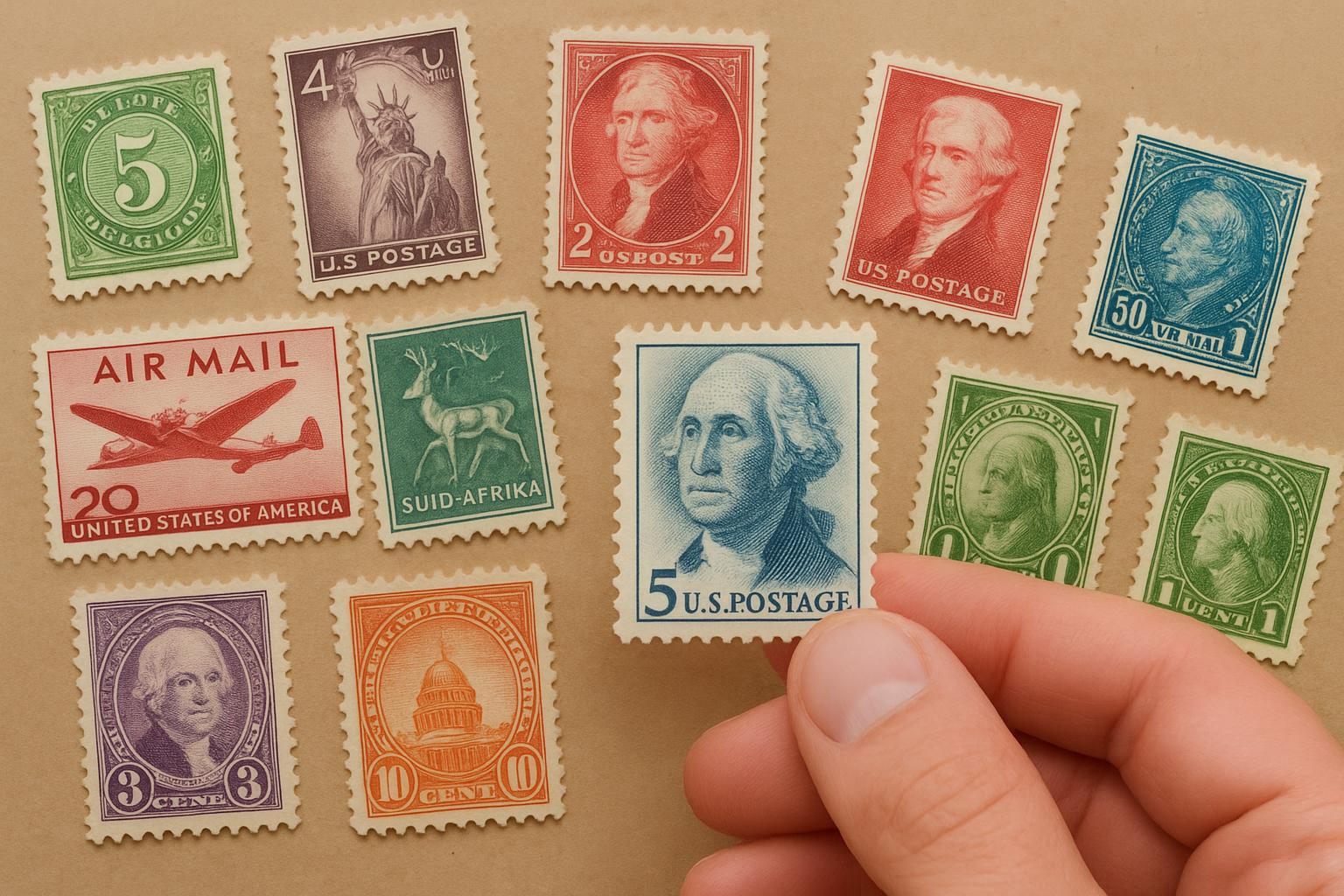
The simplest step in learning how to identify stamps by denomination is to read the face value. Many stamps print a clear number: 5, 20, 50. Some spell it out: “One Shilling” or “Two Cents.” If the number is obvious, note its format—numeric or word—and the currency unit that follows. That little detail can narrow the era and country quickly.
Look closely. Sometimes the value sits in a corner; sometimes it’s part of the design. On older stamps the denomination might be faint or worn. Clean up your magnifier and examine both the front and the back for any ink showing through.
Understand Currency And Overprints
Countries change currency or revalue postage from time to time. When that happens the easiest way postal services react is with overprints. A 1910 stamp might be overprinted with a new value in 1940. Overprints can be crude or neat, in red or black. Learn to spot them.
Also, some countries issue stamps denominated in one currency and later in another. If you want to know how to identify stamps by denomination, always check catalog dates and historical currency changes. A “centavo” stamp and a “cent” stamp look similar but mean different things.
Check Design Clues Beyond The Number
Denomination stamps often have consistent style cues across a series. Governments tend to keep the same portrait or emblem and only change the color and number when issuing different rates. If you’re holding a block of stamps, compare color and design to spot the series progression.
Color cues are useful but not foolproof. Printers sometimes reused plates and shifted inks. Still, a blue 5-cent and a red 2-cent in the same series usually tell you the values at a glance.
Font And Position Matter
Font style, size, and placement of the number are deliberate choices. Postal administrations use certain fonts to prevent tampering and forgery. A tiny serif on the numeral can identify an elusive variant. Keep a record of peculiar fonts you encounter. It helps later when you consult a catalog.
Use Watermarks, Perforations, And Paper
Denominations aren’t only printed marks. The paper, perforation gauge, and watermark tell you which printing the stamp came from. Two stamps with the same printed value may be different issues.
Perforation measurements require a simple gauge. The number of holes per 2 centimeters or the distance between perforation tips can distinguish printings. Watermarks often indicate authenticity and printing period. Learn common watermarks for the countries you collect.
How To Test Without Damaging A Stamp
Put the stamp face down on a black glass and view it with a bright light. Watermarks will sometimes appear. For more stubborn marks, use watermark fluid sparingly. Avoid soaking valuable stamps. If you’re unsure, get advice from a trusted dealer before applying any chemicals. I once ruined a fine example by being too eager; it still stings.
Consult Catalogs And Online Databases
No shortcut replaces a good catalog. Scott, Stanley Gibbons, Michel—each uses catalog numbers linked to denominations. When you want to know how to identify stamps by denomination, cross-reference the visible number with catalog illustrations and descriptions.
Online databases have high-resolution images and notes about surcharges and local overprints. Use them to compare color, size, and design details. Always match several characteristics, not just the printed value.
Watch For Surcharges And Local Issues
Local post offices sometimes add a surcharge or handstamp to meet a sudden need for postage. These can look like afterthoughts. Surcharges may change both face value and meaning. A “5c” written over a “2c” can indicate a wartime or emergency revaluation.
Local issues are trickier. Small islands, provisional administrations, and wartime authorities issued stamps with odd denominations. Learn the history of the region you collect. Context helps more than guessing.
Examples That Are Easy To Mistake
- A 1940s provisional with a handstamped new value might match a standard issue by face value but be worth very different amounts.
- Commemorative issues sometimes include a face value that doesn’t match domestic rates. A postal service may sell a 50-cent commemorative while the ordinary rate is 20 cents.
Look For Postal Markings And Usage
Postmarks and the stamp’s destination give clues about its real-world value. A stamp used on international mail might reflect a higher rate despite looking identical to a domestic issue. If you’re trying to figure out how to identify stamps by denomination, check how the stamps were used.
Rates change over time. A used stamp with a date can confirm which denomination rate applied. If you find a cover (envelope) with a clear cancel and several stamps, add up the values. That arithmetic often solves puzzles.
Photograph, Measure, And Record
When in doubt, photograph the stamp with a ruler beside it. Record the printed value, color, perforation, watermark, and any overprints. Keep notes about where and when you found it. These simple records speed up identification later.
A phone photo is fine. Take close-ups of the denomination area. Sometimes you’ll need to enlarge a small figure to see distinguishing marks. Back up your images. I keep mine in folders by country and year.
Know Common Pitfalls
Collectors often assume the largest number is always the denomination. Some stamps include plate numbers, year markers, or design codes that can be confused for value. A “12” in tiny type might be a plate number. Learn where denominations typically sit on stamps from the countries you collect.
Fakes are another danger. Forgeries might alter the denomination to create a rarer value. If a stamp seems too good to be true, get a second opinion. Provenance matters. So does a trained eye.
Use A Reference Set Of Known Denominations
Build a reference set. Keep one copy of each common denomination for the series you collect. When you’re sorting a new lot, use your reference to match colors, sizes, and fonts. A physical comparison often beats catalogs when the color is odd or the printing unusual.
It’s also helpful to keep a few specialist guides on hand. Postal bulletins and specialist newsletters announce surcharges and unusual issues before they appear in major catalogs.
When To Ask An Expert
If a stamp’s value affects how you’ll handle it, ask an expert. Appraisers, experienced dealers, and philatelic societies can confirm rare denominations and identify suspect overprints. Pay for the opinion if the stake is high. Not every stamp needs that level of scrutiny, but a little professional help can stop mistakes.
There you go. Start by identifying the printed number, then layer on design, paper, and history. If you want to know how to identify stamps by denomination, be methodical, and keep learning. You’ll make fewer mistakes and catch the odd rarity sooner than you expect. Teh joy is in the details.