## Difference Between Stamp Hinges And Mounts: Care, Handling
The preservation and presentation of philatelic material require an informed approach to materials and methods. This article examines the difference between stamp hinges and mounts, addressing characteristics, long-term implications, and recommended handling and remedial procedures for collectors and custodians of stamped ephemera.
### What The Terms Mean
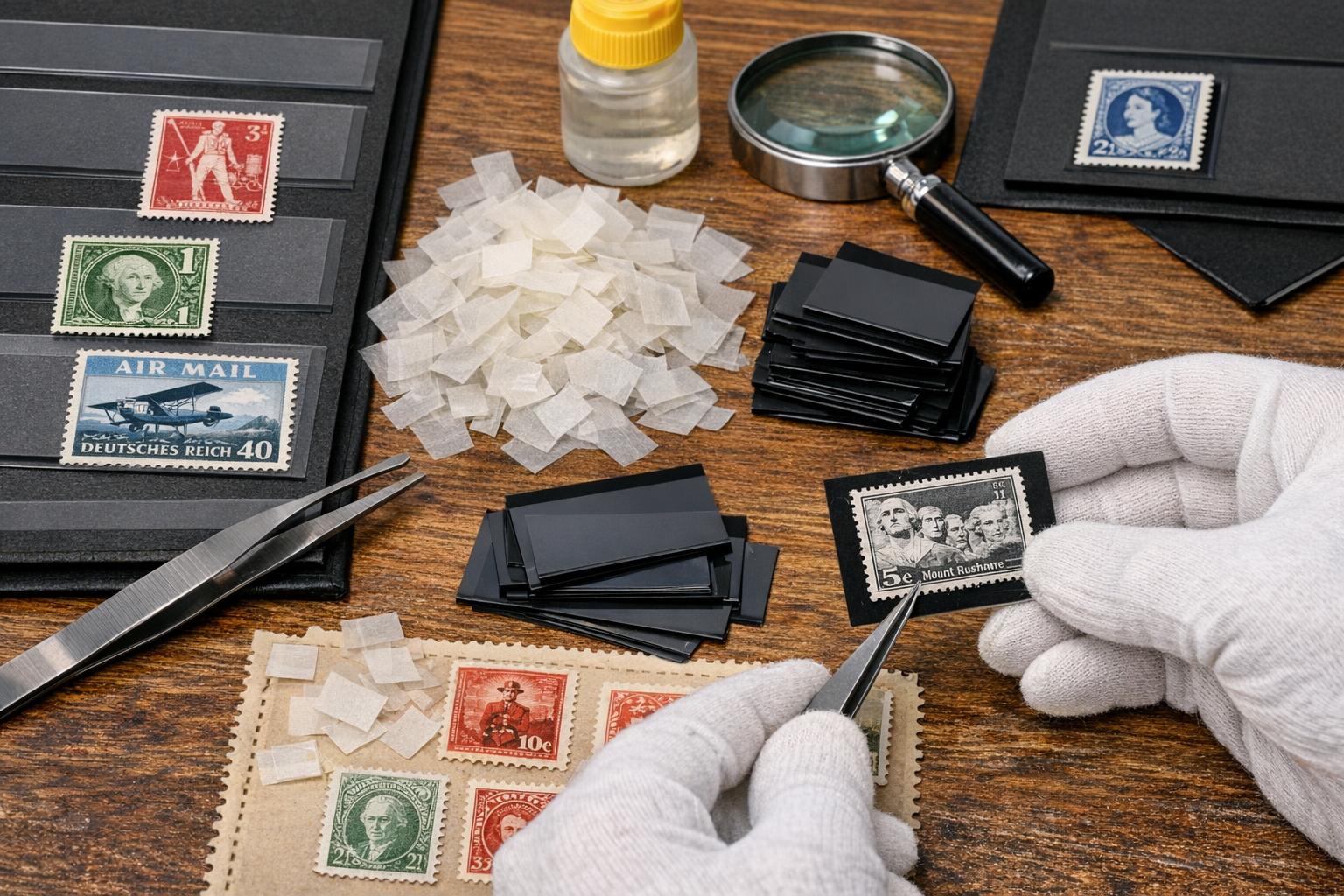
Understanding terminology is fundamental when evaluating the difference between stamp hinges and mounts. Stamp hinges are small, gummed paper strips folded to affix a stamp to an album page. Mounts are usually transparent sleeves or frames—often made from polyester (Mylar), polypropylene, or polyethylene—that hold a stamp without adhesive contact to the stamp’s surface. The practical consequences of choosing one system over another depend on collector priorities: reversibility, protection, aesthetics, and archival permanence.
### Comparative Characteristics: Hinges Vs Mounts
When assessing hinges vs mounts, consider adhesion, contact, and long-term chemical stability. Hinges provide a traditional, low-cost method for display and are compatible with tightly bound albums. However, the adhesive on stamp hinges can discolour stamp paper, damage gum, or leave residue when removed improperly. Mounts create a physical barrier and avoid direct adhesive contact, thereby maintaining both front and back integrity of the stamp. In the debate of hinges vs mounts, mounts are generally superior for long-term, archival-safe preservation, but they require greater initial investment and larger page holes or corner slits in certain album types.
### Material Properties And Risks
Stamp hinges are typically gummed paper and occasionally include a light adhesive that reactivates with moisture. This material is not pH-neutral unless explicitly manufactured as archival quality. Over time, non-archival hinges can become brittle, yellow, or transfer staining. Mount materials vary in clarity and chemical inertness; polyester mounts are dimensionally stable and inert, offering excellent optical clarity and long-term safety, whereas some low-cost plastics may outgas or become cloudy.
### Handling Protocols For Different Use Cases
Proper handling practices mitigate risks regardless of whether the collector uses hinges or mounts. Use nitrile gloves or clean, dry fingers; hold stamps by margins only; and minimize exposure to light, high humidity, and fluctuating temperatures. When weighing the difference between stamp hinges and mounts for a specific collection, prioritize mounts for historically valuable, gummed, or mint-condition stamps where preservation of gum and paper is paramount.
### 1. Safe Removal Of Old Stamp Hinges
#### Materials Required
– Distilled water in a shallow tray
– Clean, flat tweezers (non-marring)
– Blotting paper or lint-free cotton cloth
– A small brush with soft natural bristles
– A flat, nonreactive drying board (glass or acrylic)
– Weights wrapped in clean paper
#### Procedure
1. Prepare a clean, well-lit workspace and lay out blotting paper on a flat surface.
2. Place a shallow amount of distilled water in the tray. Use distilled water to reduce mineral deposits and chemical reactions.
3. With tweezers, lift an edge of the hinge as gently as possible to assess adhesion. Do not force removal if the hinge resists.
4. If the hinge is firmly adhered, dampen the soft brush in distilled water and gently apply a minimal amount to the hinge fold—avoiding soaking the stamp itself. The goal is to soften the hinge glue without saturating stamp fibers.
5. Allow a minute for the adhesive to relax. Then, using tweezers, gently work the hinge away from the stamp margin in a slow, parallel motion. If resistance persists, repeat the dampening step; never pull quickly.
6. Once the hinge is removed, place the stamp face-down on the blotting paper with a clean piece of tissue between stamps if stacking. Apply a light cover and place the wrapped weights to keep the stamp flat as it dries.
7. After full drying (several hours), assess for any residual adhesive. If residue remains, repeat the targeted dampening and gentle removal. Avoid mechanical scraping.
This remedy prioritizes reversibility and minimal intervention. It is suitable for hinged stamps in good condition but may be contraindicated for stamps with fragile inks or very thin paper; in such cases seek professional conservation.
### 2. Creating Archival Mounts For Preservation
#### Materials Required
– Archival-quality mounts (polyester/Mylar or archival polypropylene sleeves appropriate to stamp size)
– Acid-free album pages or mounts-compatible stock
– Archival-safe hinges (optional, for securing mounts to pages) or archival tape with known pH neutrality
– Soft tweezers
– Clean work surface with dust control
#### Procedure
1. Select mounts sized slightly larger than the stamp, ensuring comfortable fit without bending.
2. Place the stamp into the mount sleeve using tweezers; orient the stamp so that margins are even and the stamp sits flat. Avoid touching stamp surfaces.
3. Close the mount according to manufacturer instructions. For open-top mounts, position the stamp so it will not shift and risk folding; for upper-side entry mounts, slide the stamp in gently until secure.
4. Secure the mount to the album page using archival hinges placed on the mount’s edges rather than on the stamp. If adhesive placement on the mount is not feasible, use corner slits or mount strips designed for mounts.
5. Label entries on the album page using archival pens and avoid adhesive-backed labels directly touching mounts where melting adhesives could contact stamp edges.
Implementing archival mounts reduces the need for future interventions and addresses many concerns inherent to hinges vs mounts comparisons: mounts prevent adhesive contact, reduce abrasion, and facilitate gentle inspection.
#### Storage Best Practices
Store albums upright, supported to prevent slumping. Maintain environmental control: relative humidity ideally between 45–55% and temperature stable, ideally below 21°C (70°F). Minimize exposure to direct sunlight and fluorescent lighting; store in a dark, cool environment with good air circulation. Place silica gel desiccant packets in storage boxes if ambient conditions are humid; replace them periodically.
### Conservation Considerations And When To Opt For Professional Help
The difference between stamp hinges and mounts becomes critical when addressing high-value, rare, or fragile items. For stamps exhibiting surface cracking, metallic inks, or severe gum disturbance, conservation intervention by a qualified paper conservator is advisable. Professional conservators can perform advanced techniques—deacidification, humidification and flattening under controlled conditions, and mending—without introducing contaminants that common household methods might.
### Authentication, Documentation, And Ethical Handling
Document all interventions in a log attached to the album or stored digitally, noting date, procedure, materials used, and condition before and after treatment. Ethical stewardship requires transparency; collectors who alter mounts or remove hinges should record changes to provenance and physical attributes. This practice supports long-term collection integrity and resale or exhibition evaluation.
### Practical Decision Matrix For Collectors
When choosing between hinges vs mounts, apply a decision matrix considering value, condition, display intent, and budget. For low-value or heavily used reference collections where frequent rearrangement is necessary, hinges may be acceptable. For archival, investment-grade, or exhibition collections, mounts are recommended. Consider hybrid approaches: hinged interior pages for study sheets and mounted pages for display and preservation.
### Common Mistakes To Avoid
Avoid aggressive mechanical removal of hinges, over-soaking stamps, or using household adhesives and tapes for repairs. Do not assume all plastic mounts are archival; verify manufacturer specifications for pH neutrality and plasticizer absence. Never use iron or hairdryers to accelerate drying processes, and avoid adhesive removers with unknown solvents that can dissolve inks.
### Further Reading And Standards
Refer to recognized philatelic conservation sources and standards for up-to-date recommendations on materials and procedures. Professional organizations publish guidelines on acceptable materials for mounts and recommended adhesives to complement the practical advice provided here.
(End of article content — no conclusion provided.)
Leave a Reply